
The difference between curing and healing

Thank you for being such a loving, thoughtful community of readers, constantly helping me heal as I go. Your comments, shares, feedback, and subscriptions are the fuel that keeps Examined Family going after all these years.
There is a scar on my right thumb that I enjoy lying about sometimes. Because of the nature of it—right across the entire bottom of the digit—I tell little kids that I once chopped off my own thumb with an axe. The truth is much less dramatic. I got a small wart surgically removed when I was a girl and, for a reason I don’t fully understand, it left this rather significant scar.
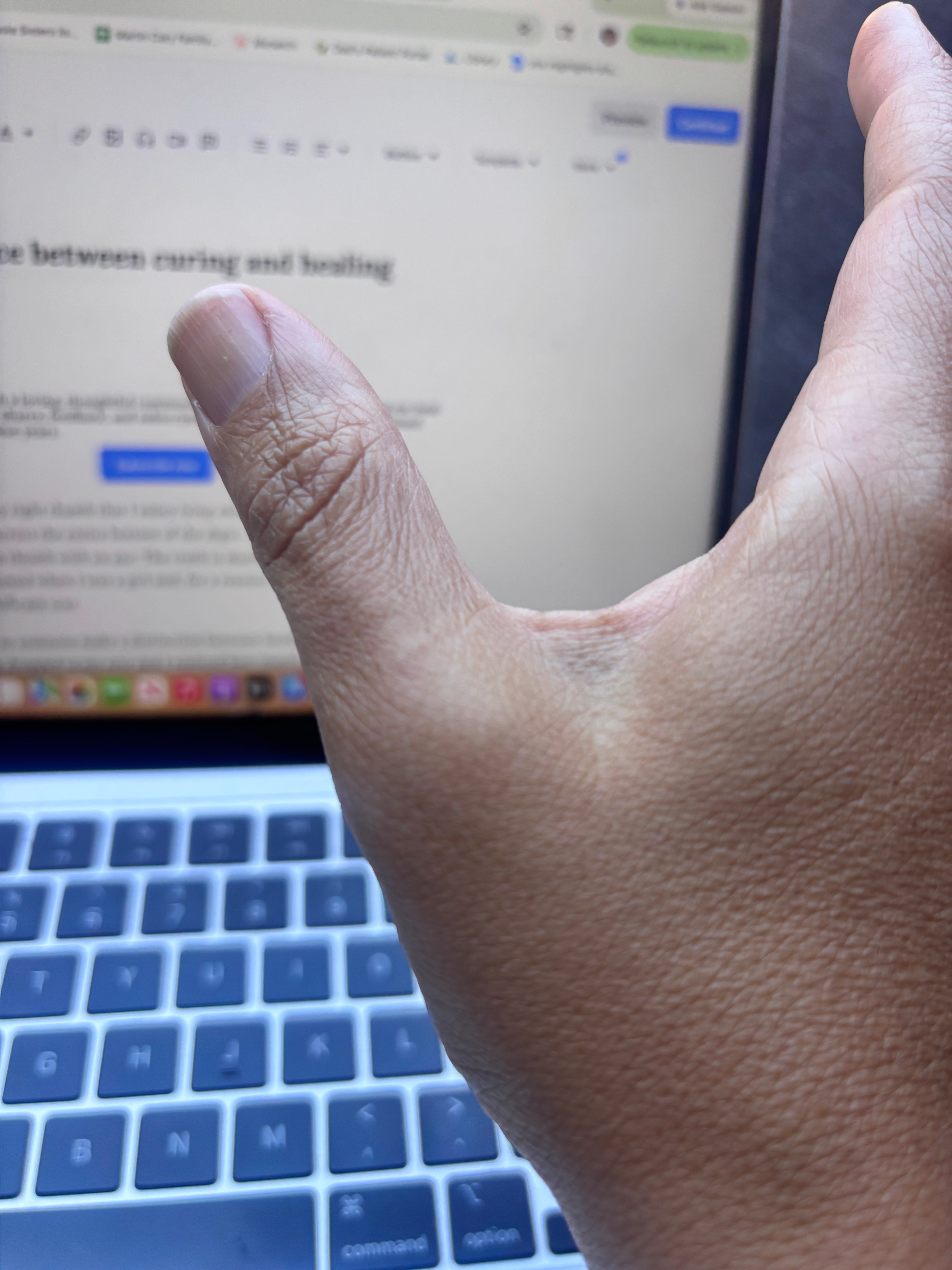
As I was listening to someone make a distinction between curing and healing the other day, my gaze dropped to my scar and I realized how much affection I have for it. If I could erase it, I wouldn’t. It has been a part of the landscape of my body for so long, somehow connecting me, not just to that wart, but to all the “warts” of my childhood, to my little girl self, to pain and growth and the rest of what comes after.
Midlife has been a real education in healing, as opposed to curing, for me. In fact, I’ve come to believe that it is the incurable things in our midst that teach us the most about being alive.
My dad’s dementia is the most obvious case in point. It is incurable, of course. But is it in-healable? I don’t actually think so. I have found it healing to find community—my support groups where people say out loud what has felt unsayable in other circles, a memory care facility full of quirky elders and dedicated professional caregivers, advocacy groups like Reimagining Dementia that are doing the cultural work to make the disease less invisible.
I have found healing through inhabiting new stories while honoring old. The dad I grew up with no longer exists. But just like that scar on my thumb, I carry that guy with me—the one who was exuberant philosophical, who helped me feel calm on an anxious day, who bragged about me and my brother to anyone who would listen. But I also don’t cling to that guy. I try to be present and in my body with the new person he has become—a mostly silent person, a person who drums his hands to music, a person who kisses me on the forehead, a person who may be going blind (hard to tell). The ability to hold the old story alongside the new story is what allows the continued connection. If I only lived in the past with him, I would no longer be able to spend time with him each week. But if I only lived in the present with him, I would be lying about my grief and what I need to carry with me forever in order to honor us both.
It also heals us—me and my dad—to acknowledge how much is unknowable. I don’t know what it is like to be him anymore. His fantastic doctor doesn’t know exactly what medication regimen he should be on, and that isn’t a failure of hers, it’s a reality of the disease, its idiosyncratic nature in our idiosyncratic bodies, and the lack of collective scientific understanding on it all. The more I acknowledge and paradoxically explore and accept the unknown, the more healing seems possible.
If I look for cures, I suffer, and I think he does, too.
Turns out, this applies to my parenting as well. When I try to cure my kids of what ails them—the heartbreak of losing a friend, the excruciating wait for something they want, the tension between two very different sisters—I sometimes create temporary relief for them, but in the long run enable greater suffering. They can’t develop the muscles of healing if I don’t give them space and time to hurt, to grieve, to tolerate the incurable.
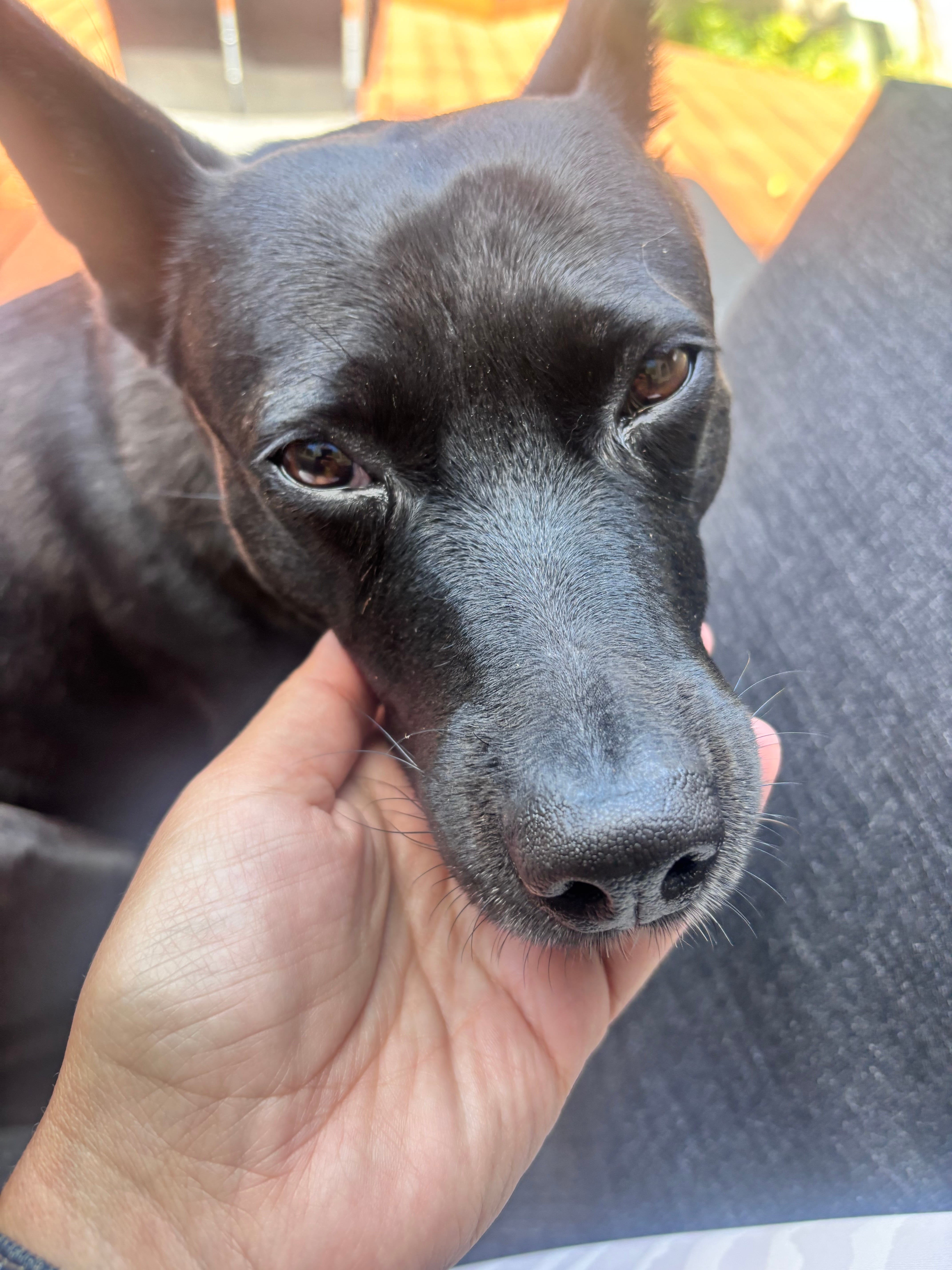
We just adopted a rescue dog a few months ago. She’s four years old, so she’s lived a lot of life before we got her. There is no curing her of the trauma she’s had and we will never know the exact nature of it. Like my dad, my dog Della is a deeply embodied, but silent partner in healing. There are clues—she’s missing one of her front teeth, she barks savagely at men on bikes, she has likely had a litter of pups the shelter reports. We will move forward, without much reliable insight, from here—trying to heal her nervous system from what has distorted it, loving her each day and reassuring her that she is now safe, understanding her limitations because of the unknowable life she’s led.
Curing is so often whitewashing, redacting, pretending, repressing, perfecting, purity, delusion. It requires you to pretend to know exactly what should happen, to remove, to run away, to erase.
Healing is wabi sabi, reflective, representative of reality. It is about groping towards what is truly possible, and not always knowing what is truly possible. It is about witness, accepting acknowledging limitations and portals and endings. It is about the freedom that comes from telling the truth.
I think I spent too much of the first half of my life looking for cures. I came by it honestly. We live in a country obsessed with cures, a nation that creates so much suffering because we refuse to tell the truth and let it be a portal, because we are afraid to heal honestly, which is to say messily and with a lot of uncertainty about how it is all supposed to unfold. Healing is such a destabalizing, surprising journey, while curing promises control and often leads to blame.
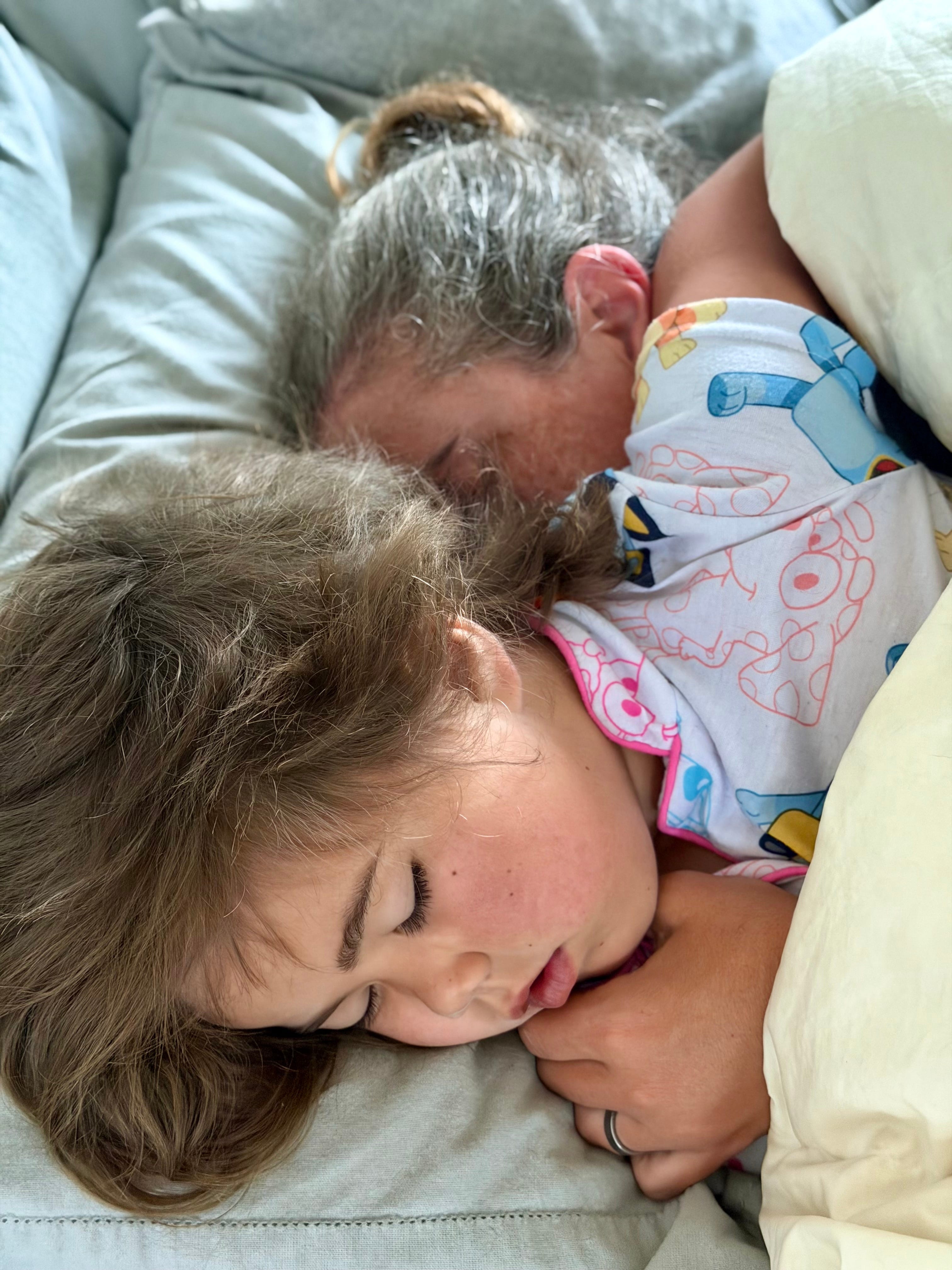
My husband’s scoliosis wasn’t cured as a kid and so one of his shoulders is noticeably higher than the other. Whenever I end up behind him, walking somewhere, I see the slant and am reminded of his vulnerability, of who he was as a child, of all that has gone unsaid and unsolved. And I don’t wish him symmetrical. I love him even more for his specific, imperfect body. I know it as a home. Usually he’s holding one of our daughter’s hands. Usually the day is long. But we all curl up together somewhere in the house when night falls, our lids eventually grow heavy and breathing eventually slows, and I wrap my arm the closest creature, that scarred thumb healed by the proximity of all these inevitably irreovocably broken bodies and hearts.
"The ability to hold the old story alongside the new story is what allows the continued connection." This simple, eloquent sentence holds volumes, and cuts right to the heart of things for me, thank you.
My husband and I have a great nephew who has in the past couple of years gotten himself in a little trouble. Also like you all we’ve been adopted by a beautiful dog who also has apparently had at least one litter of pups and also wears physical and emotional scars of abuse. Once we had to be away from our home for a couple more hours than we’d thought and so asked our nephew if he could give our dog a potty break and then maybe sit with her for a bit. Soon we were being sent a picture of Ellie sitting calmly in our livingroom when we had rarely found her anywhere but hiding in our closet. We asked our nephew what he had done to coax her out to which he replied, “I don’t know….nothing….she just followed me.” That first visit was not a miracle cure for either; Ellie still hides sometimes in the closet and our nephew has had more visits with school personnel. I think though that they heal each other a little every time they are together