
Sinking and watching
how families ever evolve

Hey friends, if you’re in the Bay Area, I’ve got a fun event coming up. It’s called Storytime for Caregivers, Tuesday March 17, 10am, at Local Economy. We’ll talk a bit about Learning in Public, but even more about sandwich generation caregiving and more of my recent writing here at Examined Family. Register before it sells out! Can’t wait to hang and hold your babies.
My mom wanted to leave the hospital.
As she discussed with the hunky PT, Shane (total Heated Rivalry material), this hospital was great at a lot of things, but sleep and food were not two of them. Despite having only received a brand new titanium left knee just 24 hours earlier, my very determined mother got dressed out of her medical gown and into her forest green top that makes her green eyes shine and her black swishy pants. We showed off pictures of our ADA accessible bathroom (thanks John!) to the OT. My mom even did the stairs in the little hospital gym, winning lots of praise from the hunk. Things were looking good.
But then her blood pressure dropped. And dropped again. And she was wobbling in a chair on the edge of passing out. And even the stoic nurses looked visibly freaked out as they got her back into her hospital bed and elevated her legs. “I feel like I’m sinking,” she said.
I stayed calm through out. I’ve learned that when there is crisis around me, my feelings go stealth. It’s very convenient in the short-run and sometimes leads to havoc in the long run. It’s like there is some hollow part of my heart where I store up all the grief and panic. Sometimes it leaks out later—I find myself yelling at my husband in the neighborhood park or listening to sad songs in the dark and sobbing and feeling exquisitely lonely. Maybe you’re like this, too. A lot of us eldest daughters are (I’m not technically one, but definitely an honorific; my big brother agrees.)
In any case, as my mom was sinking, I was watching and breathing and feeling grateful we were, in fact, already in a hospital (that, yes, she was trying to leave) where they know how to deal with such sinking. I was also reminded how sometimes it is easier to be the one sinking than the one watching.
As it turns out, I had given birth to two brand new babies in this very same hospital, where my mom was not getting a brand new knee. In the case of the first baby, there had been some moments of sinking that I have no memory of, moments when machines were beeping angrily and the c-section team rushed in, and then backed off. All of this is just a story to me. I don’t remember any of it. I was trying to stay above water while waves of pain threatened to pull me under. (The nurses said they’d never heard a woman curse so much in labor!)
My mom recently sent me a little reflection she had written right after the birth and reading it feels like reading about some other person entirely:
Home last night after 14 hours of a day where it never stopped. It was boot camp hard for Courtney. She had been laboring hard for a few hours before we got there as it was just starting to get light. I doubted she would make it a few times...super hard and intense contractions…and then…pushing on top of that because she was so tired I think. I worried she might have to get a c-section at the end from sheer exhaustion but she drew strength from somewhere and finished! I cried a few times seeing her in that level of fear and pain (tried to make sure she didn’t see, and even so at one point she told John to have us leave because it was too much pain for us to see...still aware and concerned for us in all that pain!). But I was able to be fully present supporting she and John...witnessing with Ron who was there the last 5 or 6 hours AND IT WAS MIRACULOUS! I can’t believe I got to witness what I did, to see everything; the pain, the beauty, the mess, so many experts working together with no ego...just in service of mother, father and child, the wonder, that little body finally sliding out, my daughter doing the hardest thing she’d ever done in her life and enduring, John being such a good partner, even though I could see how scared and overwhelmed he was, Ron witnessing and holding such a solid space, Courtney letting me moan with her, massage her feet, help in any way I could, all of it.
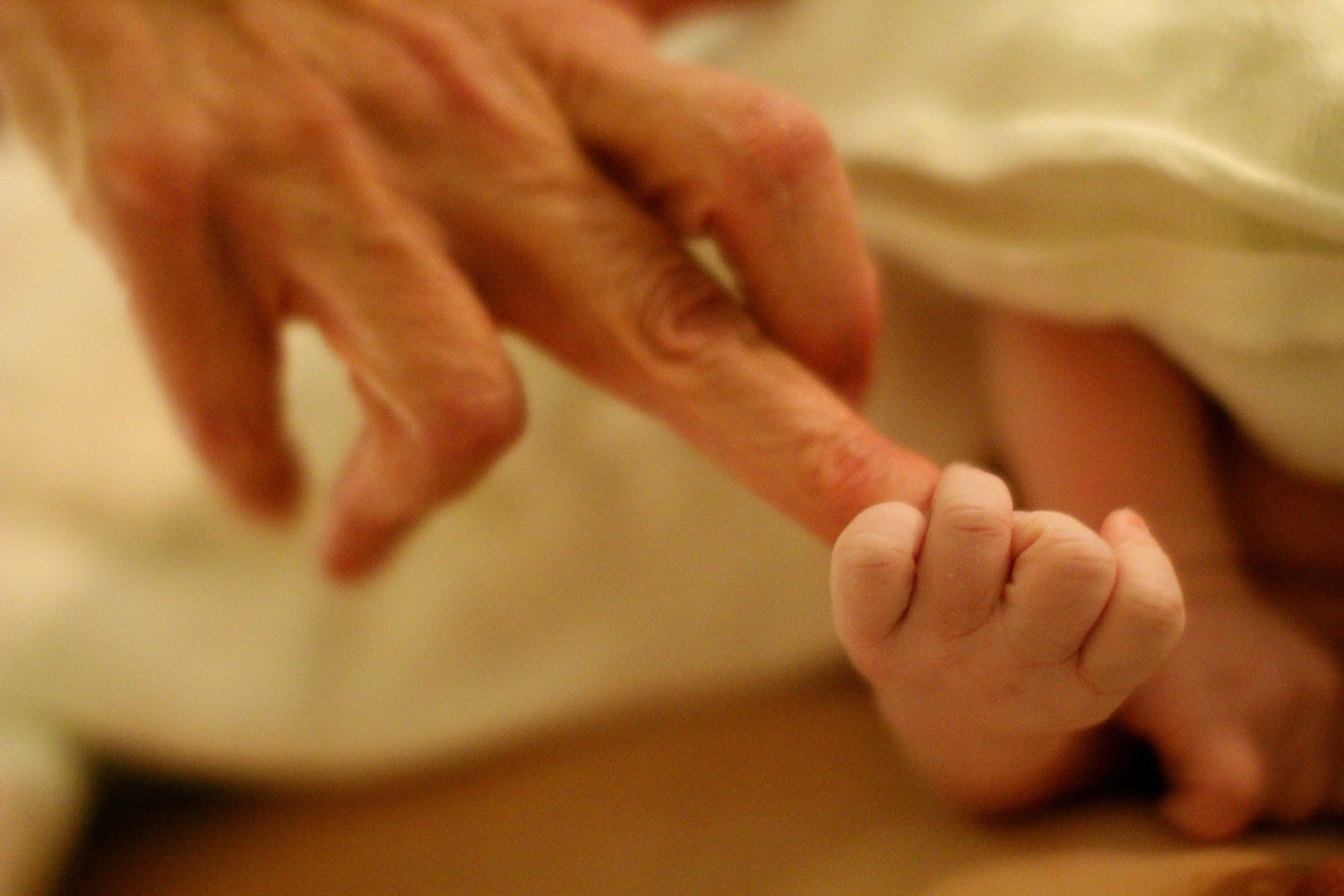
That baby sliding out is now 12, my dad, Ron, is now anything but solid due to his advanced dementia, but here we are still—daughter and mother—learning how to trade off witnessing one another’s necessary and meaningful pain towards new life, laugh within the absurdity and beauty of transitions, marvel at one another’s endurance and curiosity.
My mom got all the nurses life stories—Joyce, Brittany, Naaz. When you spend a little time in a hospital, by the way, you really feel the vibe particular to the diversity, quiet dignity, and shared purpose of a public institution. I feel the same way in hospitals as I do in integrating public schools or lively public libraries or even relatively well run DMVs. Healthcare should be public and universal; it’s so obvious.
Anyway, the only one that didn’t fall under her full soul-baring spell was probably Mandeep. They did go pretty deep on his allergy to flowers (tough one for a guy who works in a hospital) and his love of sci fi (my mom enthusiastically wrote down his recommendation of Stargate SG-1). But he seemed a little armored up, more impervious than the rest to the charms of the home-dyed red head with the sparkly green eyes and the worrisome blood pressure.
“They’re not letting you out of here tonight,” Mandeep tells her. Her face falls. “But I’ll page your doctor just in case, see what he says.”
“Okay, thanks,” she answers.
I take off my shoes and crawl into the hospital bed next to her. I show her how to play The New York Times game Connections on my phone and then she gets her book of “brown belt” Sodoku and shows me how she solves the stubborn little puzzles each night, sometimes a little stoned on the gummies she takes for sleep. We screw up the Soduku and laugh as she crosses the whole dumb thing out. “I’m bad luck!” I yelled, and she say, “No, you’re not! Who cares?”
Then we grow quiet—the first time, really, since 9am that our banter has stopped. The big shiny windows on the building next door is lit up with the setting sun—orange and glowing. We both shut our eyes and fall into a soft, light sleep. I love listening to little puffs of breath leave her mouth, feeling the press of her arm against mine. She is alive. I still have this woman who gave me life, who watched me give life to two other baby girls, who is now—in a sense—charged with rebirthing herself for this last act of the loveliest, luckiest, unluckiest life.
A long life together—63 years in my parents’ case—is a whole world, an ecosystem of emotions and habits and jokes and heartbreaks that permeates your very cells and shapes you indelibly. My mom’s body is learning how to be a body anew—her nervous system disentangled from my father’s, her night’s spent alone in her bed, her appetites unencumbered by his for the first time in six decades. In some ways, it’s like a reverse postpartum. Just as I left this same hospital 12 years ago with the challenge of learning how to be a person anew—me, but a mother, too—my mom is learning how to be a person anew—her, but also a liminal widow. One transformation involves gaining a human in the little family ecosystem and one involves losing a human in the little family ecosystem; both are paradigmatic, cellular, full of grief and possibility.
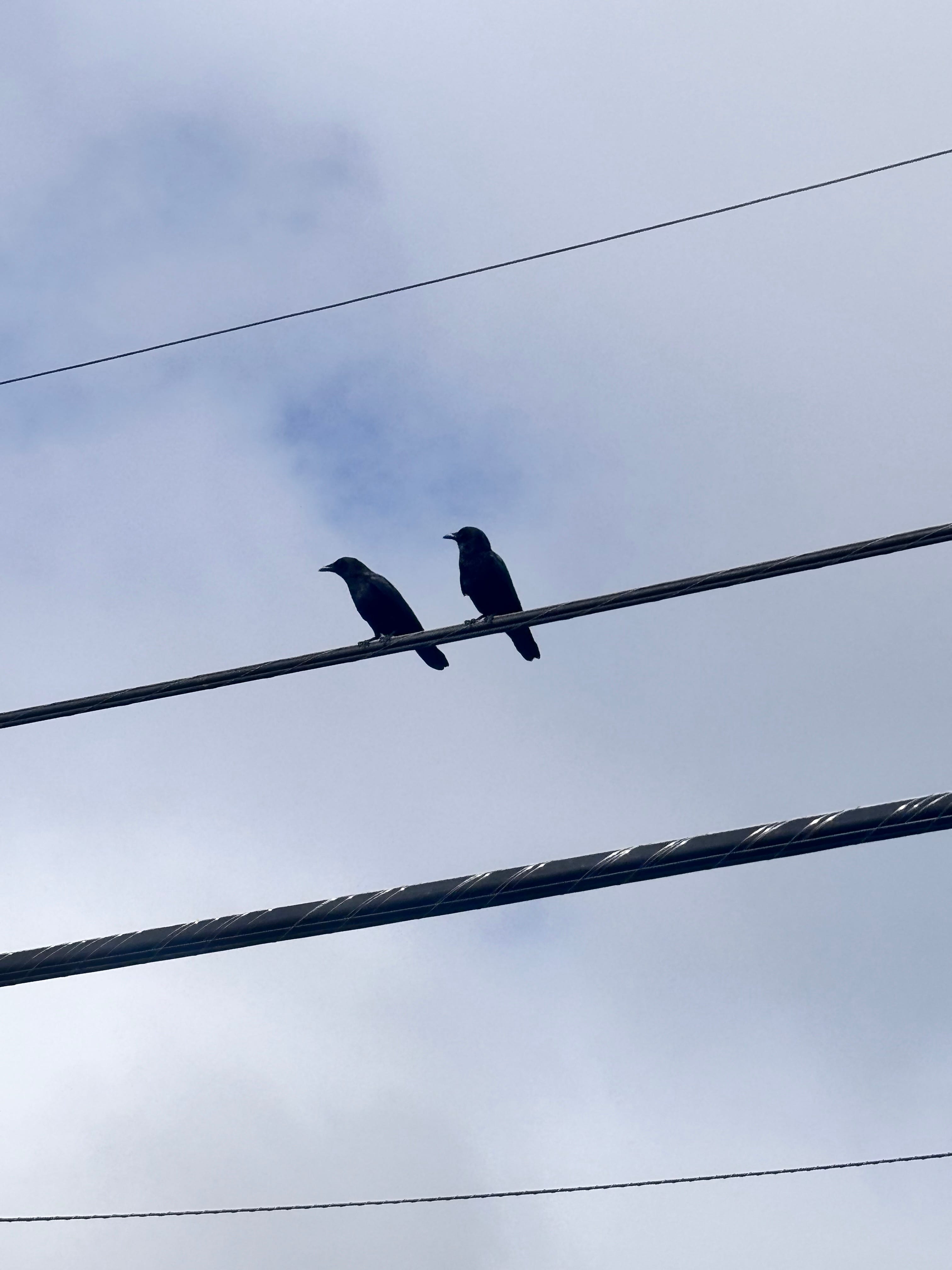
We speak about families as if they are static units, but really they are constantly evolving ecosystems of emotions, expectations, language, and love. Inside jokes are born and die. Ways of touching, soothing, infuriating, understanding fade and new patterns emerge. So many skills are learned and unlearned in the course of a long marriage or parent-child bond, ever evolving and shapeshifting. My mom and have both been reconfigured by this season. I’ve become a caregiver for my parents and have a much more vivid sense of my own power and limitations. My mom has become a woman without a partner by her side, adapting to a chatty granddaughter bursting her bubble of solitude and learning to do her own taxes and play her own music and keep her own rhythms of reading and grieving and reaching out to her friends and noticing the auspicious couple of crows that has moved into our courtyard.
One thing that remains unchanged about my mom is her stubborn strength. Mandeep comes back at almost 8pm and says, “Well, I’m shocked but they’re letting you out of the hospital tonight.”
“That’s what I’m fucking talking about!” My mom said, quoting Olympic Gold ice skater and Oaklander Alisa Liu.
Like daughter, like mother I guess. Even Mandeep couldn’t hide his delight.

how lucky we are that you open these doors and windows for us. xxxx
(also how domestic life got a reputation for being less rich, wild, challenging and transcendent than out of the house adventures is truly truly beyond me)
this piece buoyed my spirits today. I loved your description of a family not being static and it really resonated with the theme of "everything is change" that I've been working on with my mediation group.