
What's left?

Thank you for all you do to witness me through this season, to offer your comments and insights in our always enlivening comments section, so full of solidarity and wisdom. I am so grateful. And as always, subscriptions help me sustain this space, as does sharing these newsletters with friends who you think would be nourished by them. Maybe this week, send this to someone who knows a thing or two about “long goodbyes?”
I thought my dad would be dead by now. But he isn’t.
He is, at this very moment, probably eating breakfast next to his roommate, Tony, while 80s music videos or a Hallmark romantic comedy plays on the big screen TV in the west wing of Elder Ashram. His forearms are dotted with dark purple bruises—a side effect of thinning skin and his ambitions not matching his skill in moving around in a wheelchair. His eyebrows are in need of trimming, though his hair looks sharp. He has no words, but still a mirthful little smile that plays across his lips, as if he has an inside joke that he’s not telling anyone.
Tomorrow afternoon I will go see him, as I do each week. When I walk in the front door, I will sign in and greet the front desk person. Then I will start my search for him. Often he is participating in a class, his wheelchair set in a circle among other wheelchairs and more mobile folks in chairs. I pull up a chair next to him and greet him, “Hi dad! I missed you.”
This is the first moment of truth each week: will he make eye contact with me and shine even a brief ray of recognition towards me, or will he look beyond me? Impossibly, I have learned not to take this moment personally. Perhaps this impossibility has somehow become possible because I have also learned that the first moment of truth is not always the whole story. Sometimes a shared chocolate bar or a song or a joke will be the switch that illuminates our connection.
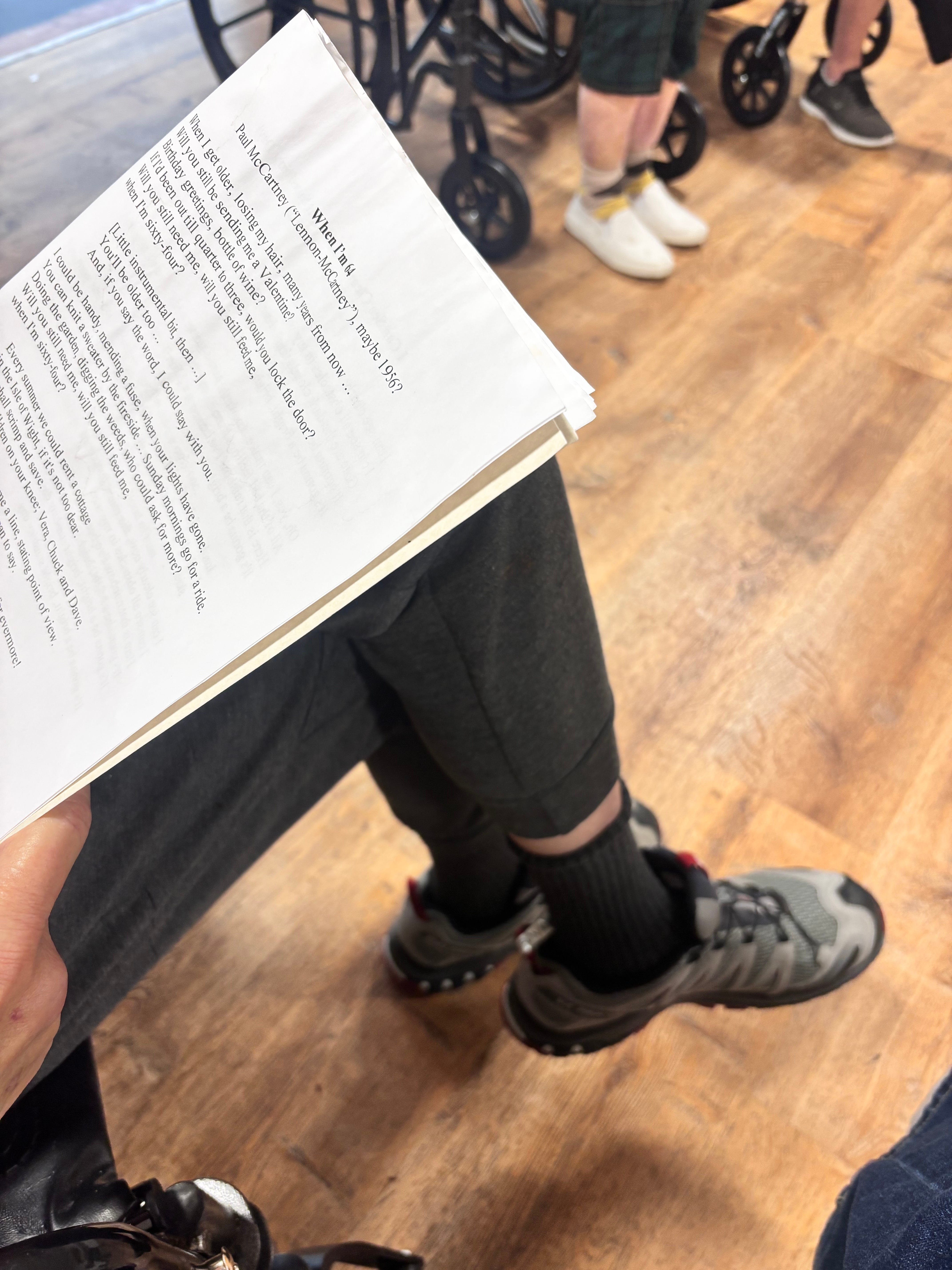
I have learned to ask not, “Does he know me?” but “What’s left?”
Sweets and song and humor last. Sometimes when I lean on his shoulder he kisses the top of my head. Each little peck feels like a miracle, a signal of enduring and distinct love that broke through the cosmic static of a brain that is ever loosening its grip on specifics. But even if there is no kiss, even if his gaze never quite lands on me, I hold his hand and rub his shoulders and try to be a faithful witness of his transforming form.
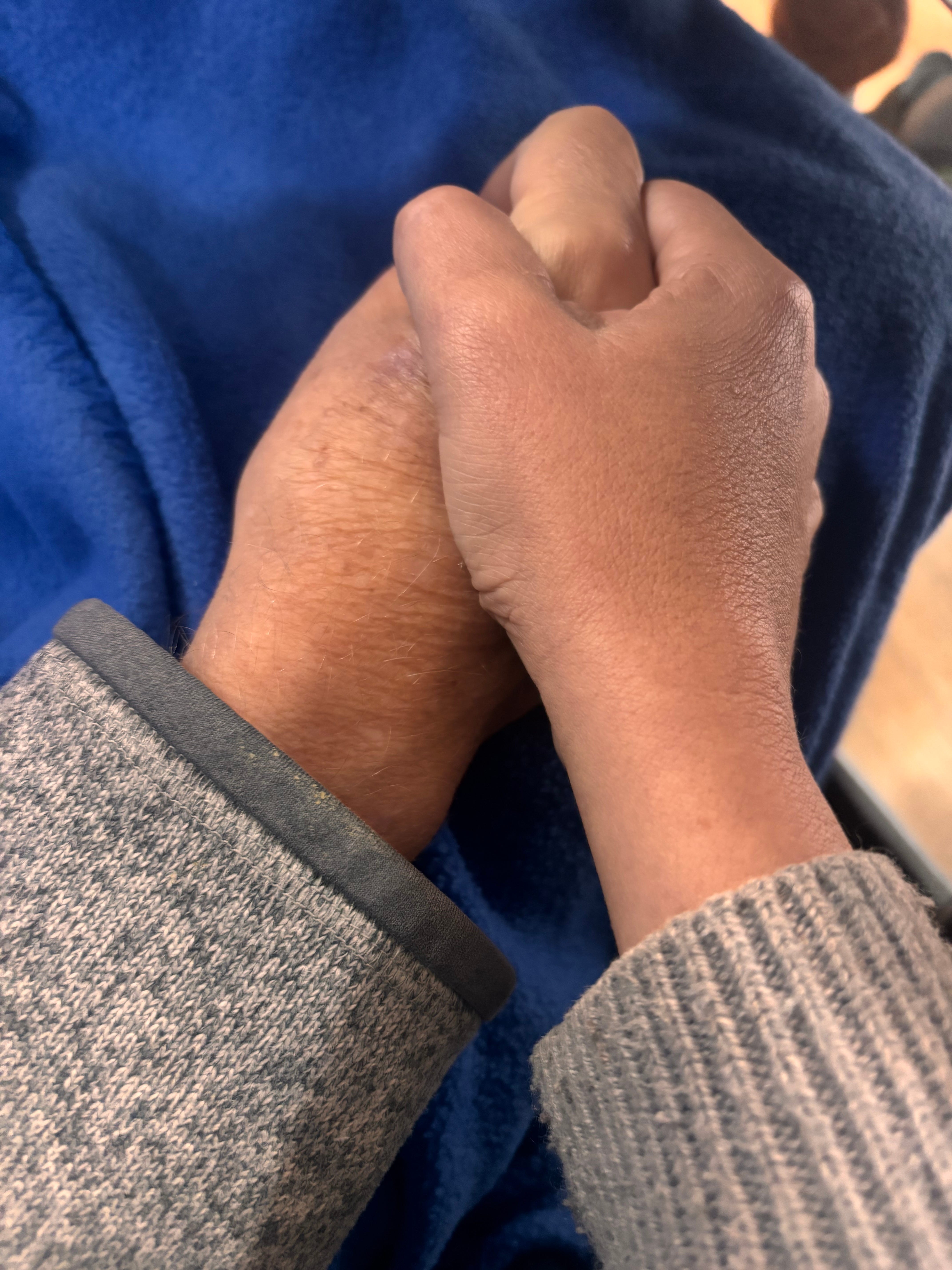
This is a spiritual practice—to love someone so deeply that you learn to let go of everything except “What’s left?” and “Is he suffering?”
The latter is not a question with a simple answer, but it’s one I’d guess so many families don’t answer honestly. Too often we answer “Am I suffering?” instead of “Is he suffering?”
Is my dad suffering? Well, I don’t love the bruises, but they don’t seem to bother him. He’s eating beautiful meals. He’s got quirky and wonderful companions, like Tony. He can wheel out into the sunshine in the yard if he so chooses. He hears music constantly. He falls sometimes when he forgets his legs are no longer up to walking, but even that doesn’t seem to cause him much suffering. His sight seems to be going in one eye, but again, he seems to be sort of riding the wave of his changing body without a lot of angst.
Am I suffering? Well, that’s a very different question. I have suffered tremendously contending with the nature of this disease. I am a band-aid puller offer, a jump-off-the-rock-into-the-river-before-you-think-too-much-about-it kind of person, a let’s-get-this-conversation-over-with friend. Dementia is, as they say, “the long goodbye.” I would prefer the Irish kind, slipping out of a party while no one is looking and driving home in the dark singing to myself, happy I left on a high note.
My dad’s disease has forced me to learn a new way, to give up so many things that soothe me: timelines, control, specialness, language. I have had to learn to live alongside this pain, to visit the possibility of not being known by my own father every single week, to find pleasure and joy and friendship and beauty in the visits, anyway.
Most visits he doesn’t appear to be suffering. If I notice something—a grimace or an unexplained wound, I visit with the loving caretakers there about it, I message his doctor, we brainstorm together how to reduce any unnecessary suffering. But he will suffer. His brain is eroding. He will suffer. That’s part of life.
And I will suffer. I can’t expect to leave every visit feeling satisfied with our connection. I don’t make my weekly pilgrimage to feel satisfied. I make it to be a faithful witness to the man who was my faithful witness for most of my life. There will, no doubt, be other long goodbyes of various kinds in my life and I want to have the endurance to show up for them. I make it so I can feel proud of myself for learning not to leave before the party is over. This, my dad’s life, is a long, lingering one—full of cruelty and surprise, mirth and assertion now, devoid of attachment and words.
What’s left?
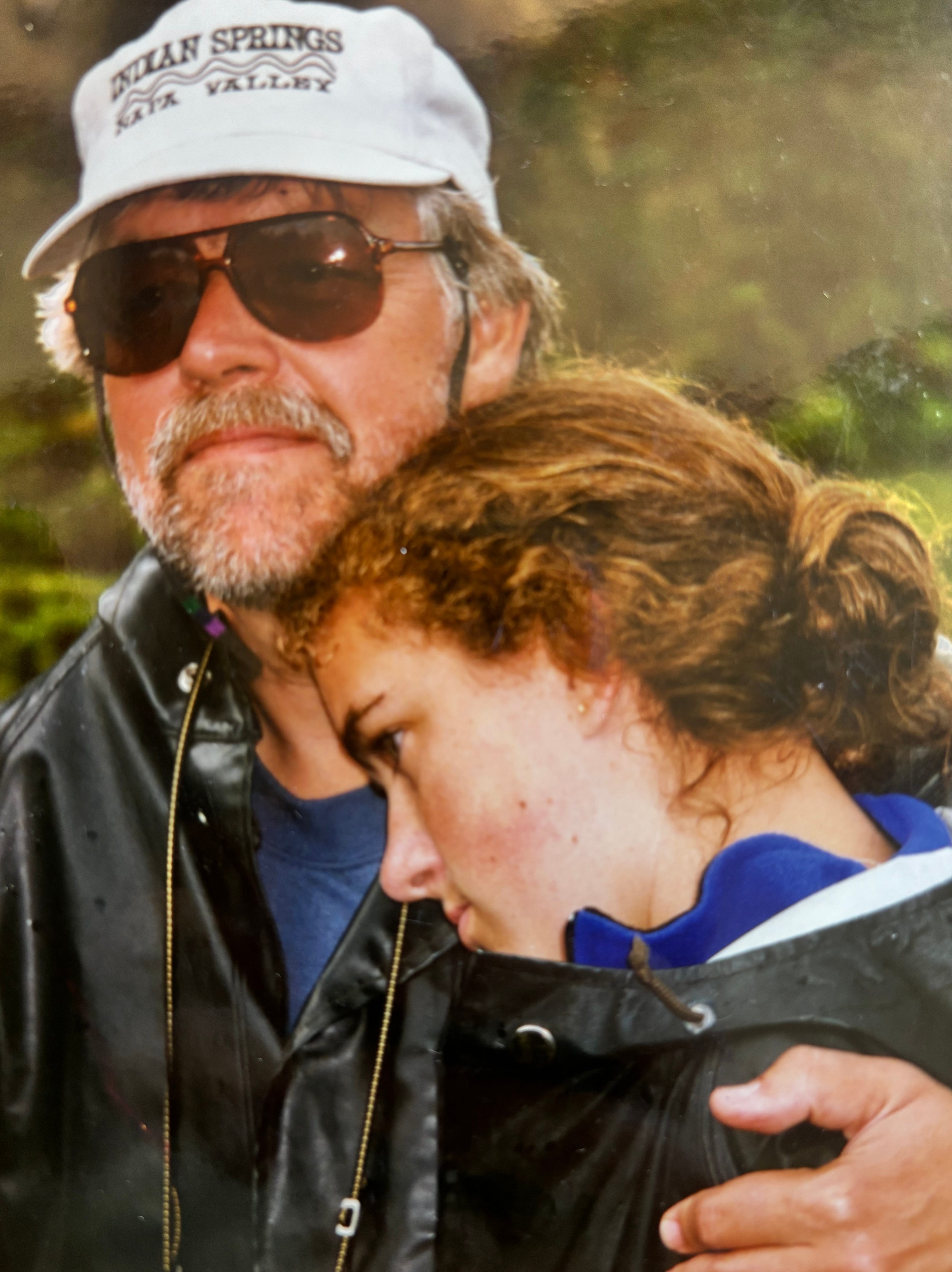
My undying love, his dying body, an enigmatic end that is stretching beyond a horizon I expected or fully understand.
When I was a little girl, my dad used to braid my hair each night before I went to bed—a way to keep my tangle-prone curls from knotting in the night, a way to prevent my suffering. Now I braid my fingers into his each week, a blessing of mutuality. It will go on like this, until one day it doesn’t. At some point, my dad braided my hair for the last time. At some point, I will hold his hand for the last time. The unknowing practice is the whole thing.
"I have also learned that the first moment of truth is not always the whole story."
Oh my, yes.
"Like" is not nearly enough of a response to this heartbreakingly beautiful post.
A spiritual practice, indeed. Thank you so much for being willing to share it, to allow us to be able to witness you, just a little.
To give up “timelines, control, specialness, language”—oof, these are my lighthouses too. Thank you, Courtney, for not just being a witness to your dad, but for sharing what you witness with us. It helps, it helps, it helps.