

If you believe the personal is the political, if you grapple with how to be a decent caregiver and a decent citizen, if you want a community of people to travel alongside during this truly precarious time in the world, Examined Family is for you. Become a paid subscriber today, and invest in a space that will help you feel whole and awake.
There was a particularly poignant moment in 4th grade for my eldest daughter. We were on the bus headed to a field trip and I was one of a few parent chaperones, yucking it up with some of my favorite moms. All the sudden, the kids all started singing a song together, one I’d never heard. I looked over and saw that my daughter’s lips weren’t moving.
“What’s this?” I asked.
“TikTok, Mom!” she said, scowling at me.
From my daughter’s perspective, the fact that she was the only White student in her class wasn’t the “problem.” The fact that the test scores were low at her school and the bathrooms dirty weren’t the “problems” either. It was that she was the only kid who wasn’t allowed on social media. That was the great social divide for her as she saw it.
This memory popped into my mind while reading Nikole Hannah-Jones’ recent mea culpa— “In Fighting for Every Black Child, Did I Betray My Own?” It’s about the choice she made to send her own daughter to a “failing,” Black school in Brooklyn. Her daughter, now 16, believes it was the wrong choice.
In part inspired by Hannah-Jones original piece about her school choice for her daughter, I not only sent my White daughter to our neighborhood school (at the time, rated a 2 out of 10), but I wrote a book about what it was like to try to be a helpful, humble part of an integrating community.
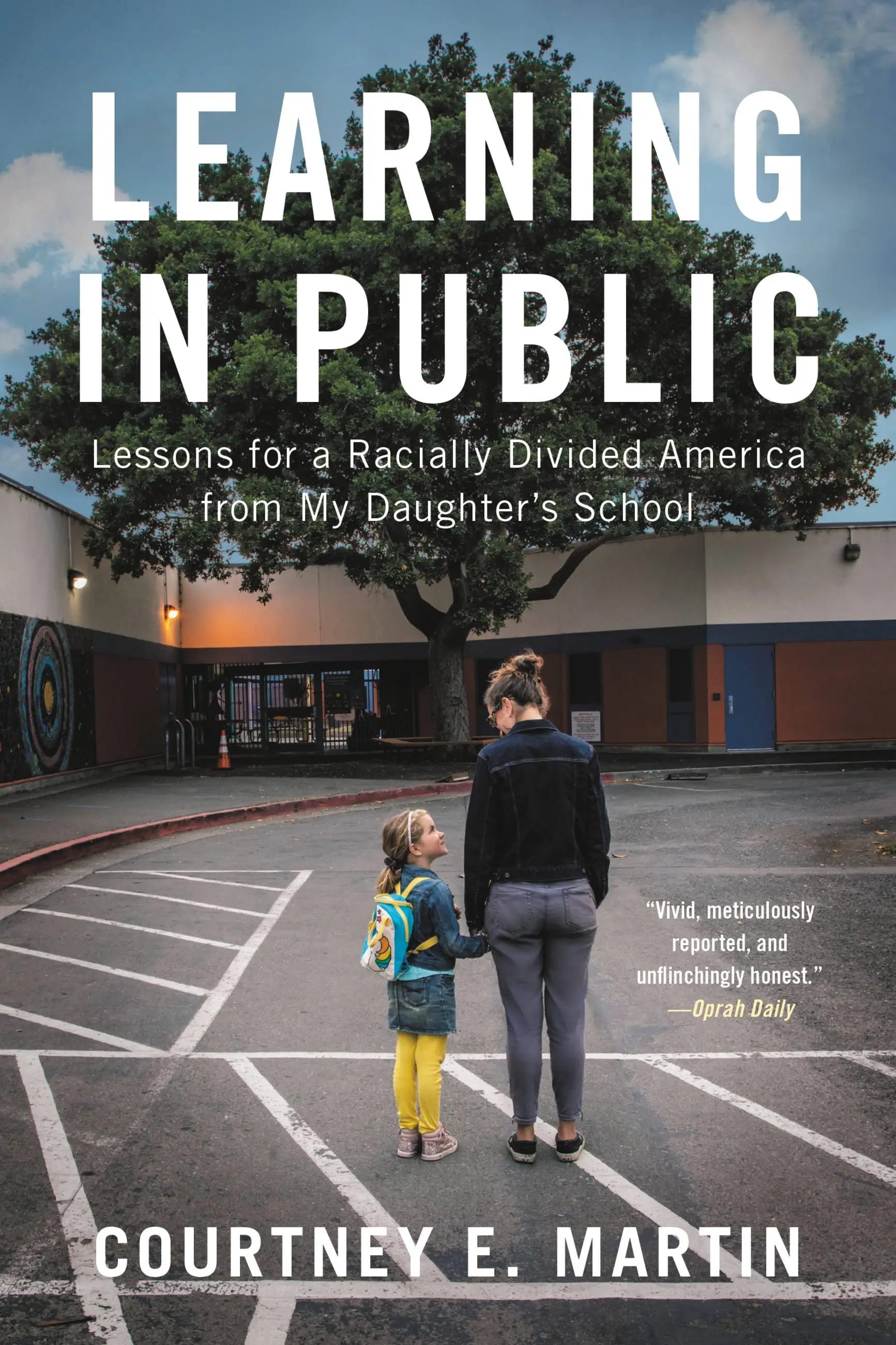
Here’s the thing: we are each parents of particular children. I have two daughters, and they are very different, so it’s allowed me to see how the same school environment has worked differently on both of them. They are intelligent in different ways, neurodivergent in different ways, have different motivations and approaches to friendship and authority, different relationships to gender and fashion and music. It changes everything.
Both of my kids have gone to a majority Black, Title I school. The eldest is academically-inclined and tends towards rigidity; she had a harder time socially than the younger one, who is fluid and magnanimous and has never met a worksheet without resistance. They succeeded in different ways and struggled in different ways while at their first elementary school–and I see that as a result of the alchemy of demographic, cultural, and individual factors coming together.
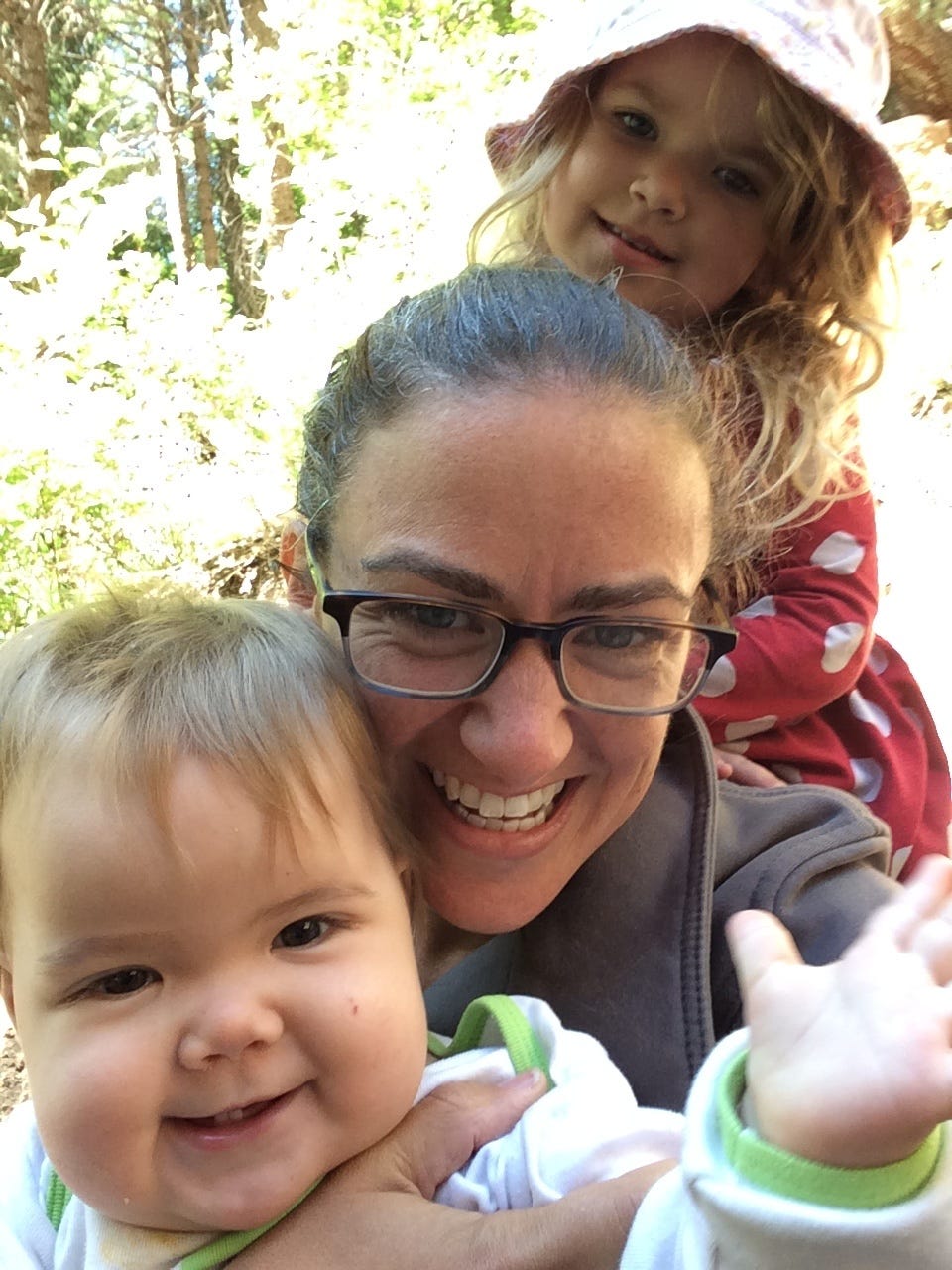
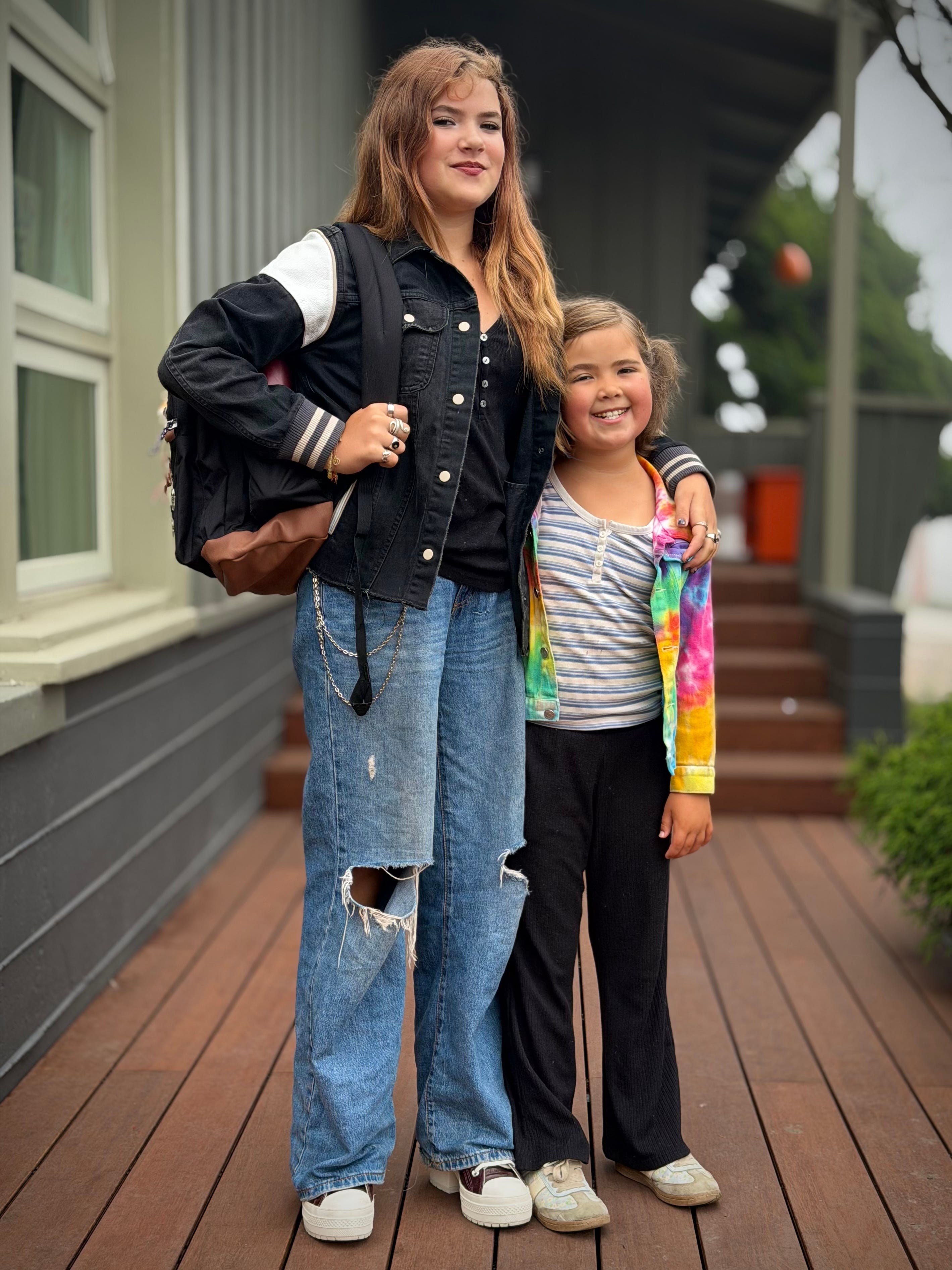
So we are each parents of particular children and members of a society that we didn’t create. And in the midst of all that, we have to decide where to send our kids to school. It is a collision of unknowns, plus our sense of intertwining and sometimes competing responsibilities to our kids, our community, our country.
This is hard moral work. And it should be. The survival and thriving of our public institutions is the backbone of our democracy at a moment when it is terrifically fragile. Parenting kids in a polycrisis is no joke.
But being a White parent with White kids, and being a Black parent with Black kids, is not the same. I can already imagine White, privileged parents using this article to justify their own educational choices. White parents have a way of mapping themselves onto things that aren’t geographically, economically, or historically theirs: particularly risk.
The biggest risk, for my eldest kid, as I saw it, was that she would feel racially isolated as the only White girl in her class some years. Maybe she would feel left out or like it was harder to make friends. I can confirm for you that at times both of these things came to pass. At times it was excruciating; there was a period in 4th grade when she was particularly reluctant to go to school. But she experienced that strain within a wider world that affirmed her in so many ways. That’s not the same as what Hannah-Jones’ daughter experienced.
I’m sure Hannah-Jones imagined what White audiences might do with this piece. She’s galvanized so many people, myself included, the Integrated Schools movement (another huge influence on me), so many individual parents who have no doubt made different educational choices because of her thought leadership. I’m sure she thought long and hard about representing her regret, and her daughter’s criticism, in a public forum. It was courageous to write honestly about the heartbreak, regardless of how others might use it to justify their own very dissimilar choices.
Parenting is a paradox–you lose, even when you win. You create the bumpers to help your kid become themselves, and when they do, they leave you. But you also win, even when you lose. Hannah-Jones may have made a different choice than her daughter wishes she had, but clearly her daughter is brave and honest and thoughtful enough, and their relationship is strong enough, that they are reckoning and healing around it. There’s no bigger win than having raised a kid that feels safe differentiating and still staying connected to you.
I also couldn’t help but notice in the end of the piece, when Hannah Jones straight-up apologizes to her daughter, her daughter changes her tune a bit, admitting that going to a predominantly Black school, even while academically disappointing, did give her a sense of self that she feels is important.
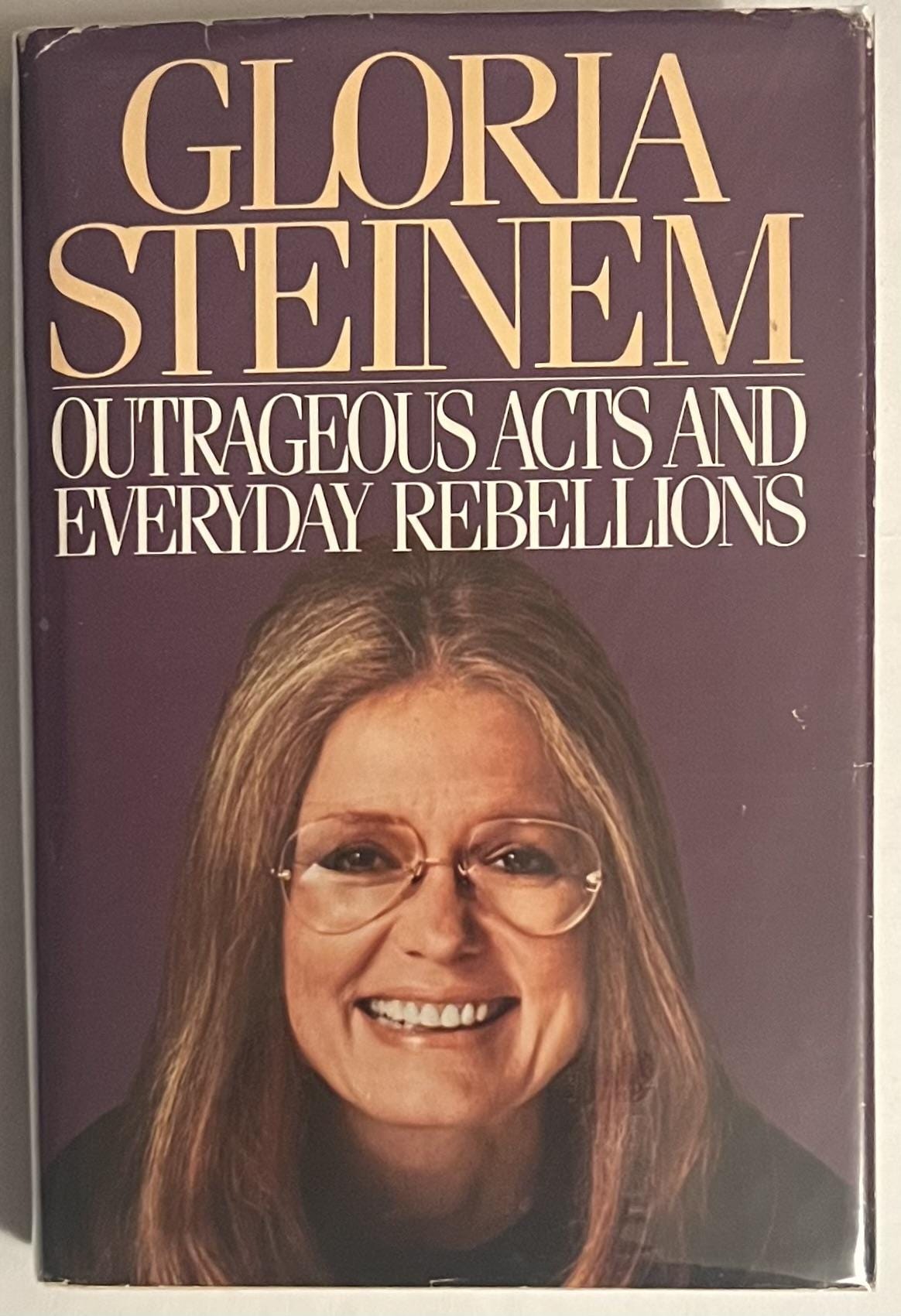
We get polarized around issues in our most intimate relationships, whether it is a marriage or a mother-daughter pair. This feels like one of those cases where a mother has become a symbol of something and a daughter rejects it, when really there are multiple truths coursing through the story. I did the same with my own mother around feminism–rejecting her talk of patriarchy and Gloria Steinem in high school, only to become a feminist blogger in my 20s. Hannah Jones and her daughter’s story will continue to unfold.
So how do I think about my choice seven years later? Well, I’ve lived a lot of life since then, including a move to another district with no central admissions system (don’t get me started on that shit show). When I look back, first sending my White kids to a poorly rated, predominantly Black school proved to be a challenging and deeply rewarding choice. The best part was the community I got to be a part of–both parents and kids, and teachers, who made me laugh, swoon, and occasionally broke my heart.
I got to contribute in ways that felt like they mattered to the whole, not just my kids: I led the school site council for a couple of years and increased attendance and rigor, making it more welcoming for parents who didn’t speak English (or educational jargon!). I raised money so we could keep our librarian at a worrisome moment. I offered a reflection workshop for teachers during the pandemic that seemed to help them stay hearty and connected during such a challenging time.
What I discovered is that I would much rather devote my energy and connections towards collective uplift in a place where they really could make a difference than being one more rich, White parent at a PTA gala, holding up my paddle. And listening a lot and occasionally pulling up my sleeves helped me find my caregiver community at school. Our connections weren’t just full of laughter, but helped us weather the inevitable instability of being part of an underfunded, inequitable system.
My eldest daughter is almost 13 now and at the a public junior high where 27% of the 721 kids are White (it’s the only public junior high in our new town). It’s rated a 5 on Great Schools. She is making friends from a range of racial backgrounds and going to her first legit school dance on Friday. I went to back-to-school night last week and found only about 2 of her 7 teachers to seem really passionate about teaching. That makes me sad, but I also know she’ll get through it and find the people and subjects that light her up. She’s a focused, ambitious kid who cares a lot about fairness and rules. She dearly loves her grandmother, who we live with, and rolls her eyes often at me these days. In fact, there’s a new meme going around, which she often says to me, “That’s beautiful, Katie.” It’s like a patronizing acknowledgement when faced with palpable earnestness.
And that’s okay. It’s her job to roll her eyes at me and I stand by my earnestness.
As a White person, as a White parent, right-sizing my risk has been an important moral, political, and spiritual practice for me. I know it’s not always easy on my kids, nor me, but the most meaningful things in life are rarely easy in my experience. When their educational journeys wind down, I hope they will look back and see that we all weathered some discomfort, but maybe also maybe got lighter by shedding delusions about our own fundamental vulnerability, superiority, or deservingness. We certainly gained some stamina and good friends along the way.
Educator Vanessa Machado de Oliveira argues that we often approach “predicaments to be confronted” as “problems that need to be solved.”
She invites us, instead, to…
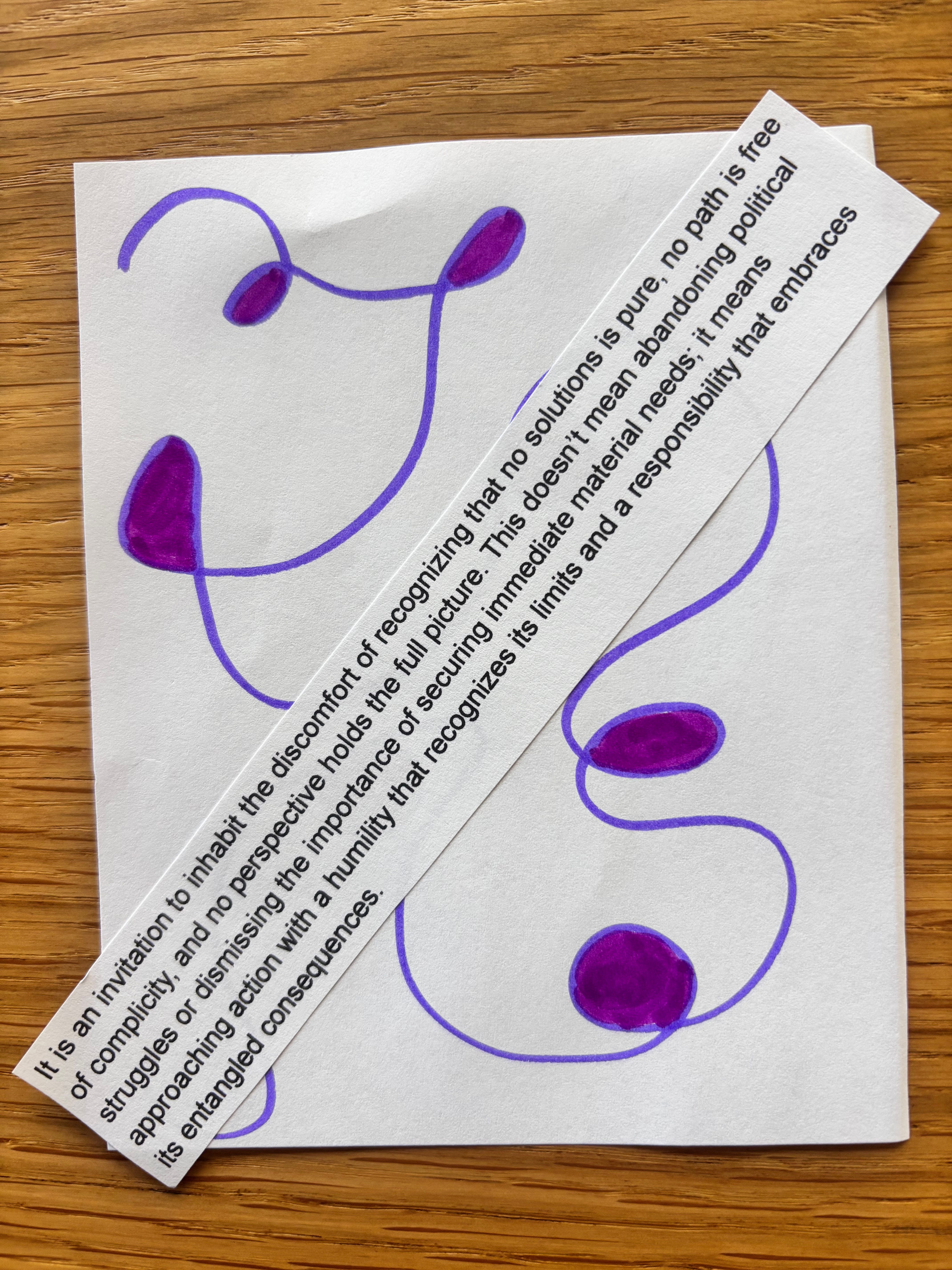
Inhabit the discomfort of recognizing that no solution is pure, no path is free of complicity, and no perspective holds the full picture. This doesn’t mean abandoning political struggles or dismissing the importance of securing immediate material needs; it means approaching action with a humility that recognizes its limits and a responsibility that embraces its entangled consequences.
I continue to believe that the choice is not between what’s best for my kid and what’s best for society. It is not Black and White or black and white. It is not even an individual choice–not a choice made by one individual and not a one-time decision. It is “entangled consequences” and those consequences hit differently, depending on who you are, and where and how you live.
Our deepest commitment as engaged caregivers and citizens must be to know ourselves more honestly all the time–to move away from performance and fear, and towards integrity and courage–and nurture our relationships, with our children and the schools and neighborhoods we are part of and those we have driven past, avoided, neglected to consider. This is the only way to strengthen the public layer of our potentially beautiful, ailing democracy.
Did you read Hannah-Jones’ latest? What did you think?
I thought that Hannah-Jones' piece was beautiful, rich and textured, honest and vulnerable, managing to contain so many truths at once. It helped me understand so much. It surprises me (although maybe it shouldn't have) that anyone would come away from it with their "hot take," which is such a reduction of complexity. No one is required to respond to a piece like this, we're just supposed to HOLD IT, which you do so admirably here. (And maybe holding things is uncomfortable and not everyone is well practised at that.)
Good perspective. I've also been challenged and inspired by this conversation. We moved our kids to public school in the city center when the oldest was in 8th grade and the baby was in 2nd. It has been the gift of my life to be involved in that public school system full of need and diversity and joy and passion. But I understand making different choices for your kids when they face different consequences. Most recently for us this conversation shifted to higher ed options. My second daughter chose a big midwest university with a national reputation for excellence and then told me on the phone after a couple of weeks, "Mom, everyone here is so white." She's white, too, and she hadn't figured into her college search the diversity she'd enjoyed at her high school. It was so familiar then, she didn't know to look for it later until it was gone. My youngest, that 2nd grader, is in a teacher education program at our in-state school. She's interested in teaching in diverse elementary schools, maybe in even bigger cities than our own. "That won't be very good for your paycheck, will it?" we asked her over dinner. "No," she said, "But it will be good for those kids." We all have little choices to make in this big world. Hopefully, it keeps adding up to something good for everyone.