

Thanks, as ever, for supporting this newsletter with your attention, your insights, and your money. It means the world to me.
You’ve probably heard it before: Anne Lamott famously said that “Help is the sunny side of control.”
I’ve been working on that for years now, trying to retrain my brain to go from being a fixing, helping, saving machine in autopilot to a humbler, slower creature who honors the full heartbreak of humanity and the obvious limitations of my own knowing or capability to duct tape it all back together. I give myself a B+. I’ve really grown. When someone I love sends me a text about some shitty thing that happened, my first, honest-to-goodness instinct is now to reflect back how shitty it is and reiterate my love for the person. That used to feel anemic to me. More and more it feels gentle and full of dignity and respect.
The new frontier, I’m starting to sense, is figuring out the difference between control—my old friend—and agency. I don’t know much about my life right now; it feels like a fog of perimenopause, caregiving, professional ambivalence, misunderstanding and miscommunication, money anxiety, political rage, and environmental grief have seeped into my well-laid plans, making everything messy and hard to see clearly. The word that shines through the fog, however, is agency. It’s like it’s lit up and neon against the otherwise gray landscape of my life right now, blinking to remind me that amidst all this probably healthy and appropriate confusion (that feels really, really bad a lot of the time), the prize is agency.
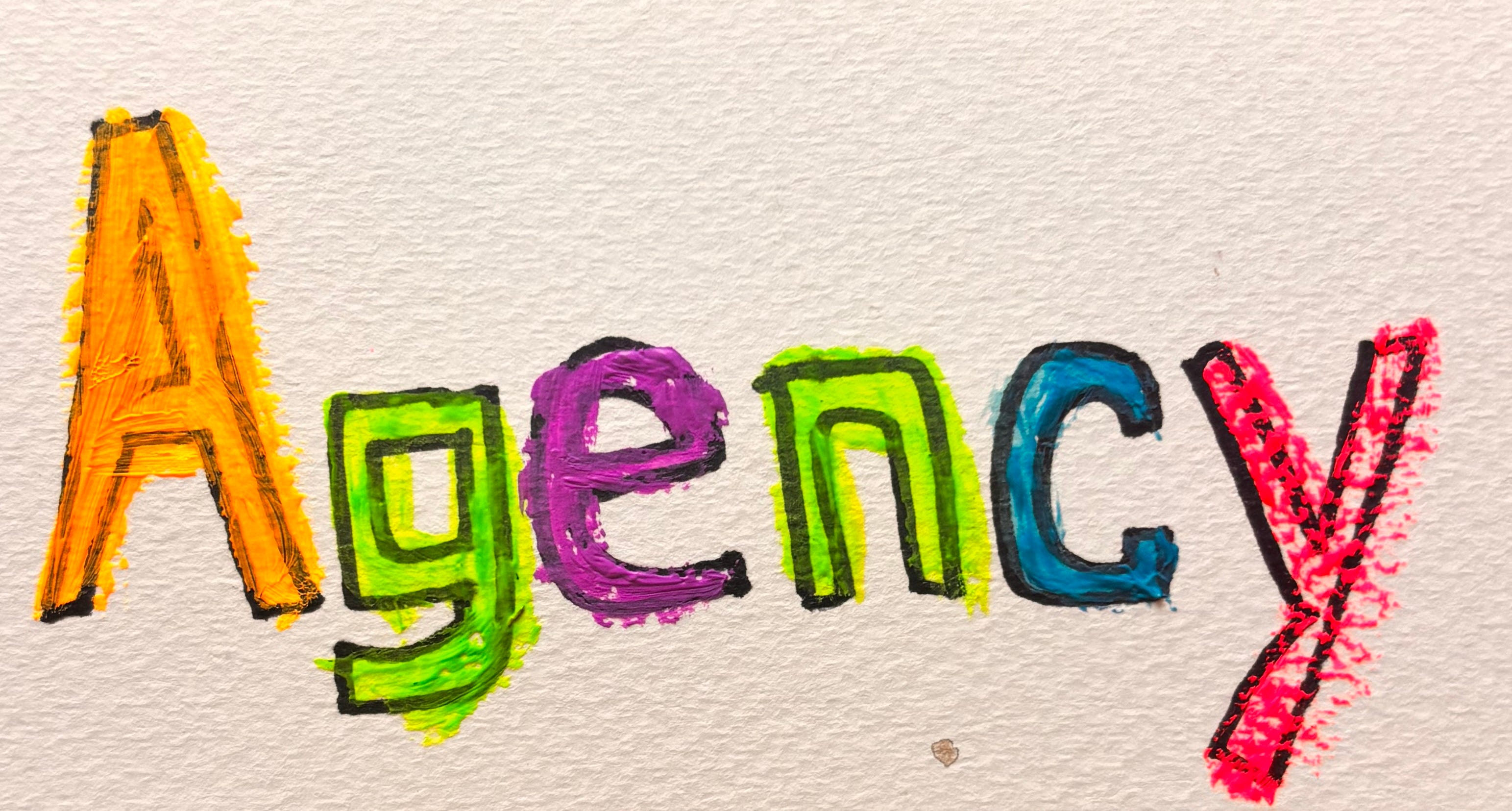
For me, this is deeply gendered and deeply generational. I’ve got women branching on both sides of my family tree who appear to have longed, sometimes perilously, for their own life, their own passion, their own agency—but instead got small, got sick, got resentful, got put in mental institutions, got suicidal. Agency requires healing—as evidenced by the gorgeous TV series, Dying for Sex, where the main character spends her last weeks on earth trying to orgasm, but more than that, trying to feel agency around her own body, her own voice, her own connection with other humans on earth. It’s awkward and hard-won and it plays with control, but ultimately, the agency is also about surrender.
You can probably feel me grappling towards something on the edge of my own knowing here. I’m asking, in real time: what does true agency feel like? Not for you (though I’m very curious about that), but for me? I imagine each of us feels agency differently in our totally unique bodies. How does the way agency feeling my body differ from how control feels in my body?
Control feels like trying to get other people to behave in ways that will allow me to live the life I want to live. Agency feels like behaving the way I need to in order to live the way I want to live. Control feels like Jenga. Agency feels like water color. Control feels like knowing too much. Agency feels like knowing only one beautiful thing. Control feels like desperation. Agency feels like pleasure. Control feels like gripping. Agency feels like arabesque. Control feels like stomach ache. Agency feels like steady gaze. Control feels like arrogance. Agency feels like sovereignty. Control feels like outside. Agency feels like inside. Control feels like puppetry. Agency feels like modern dance.
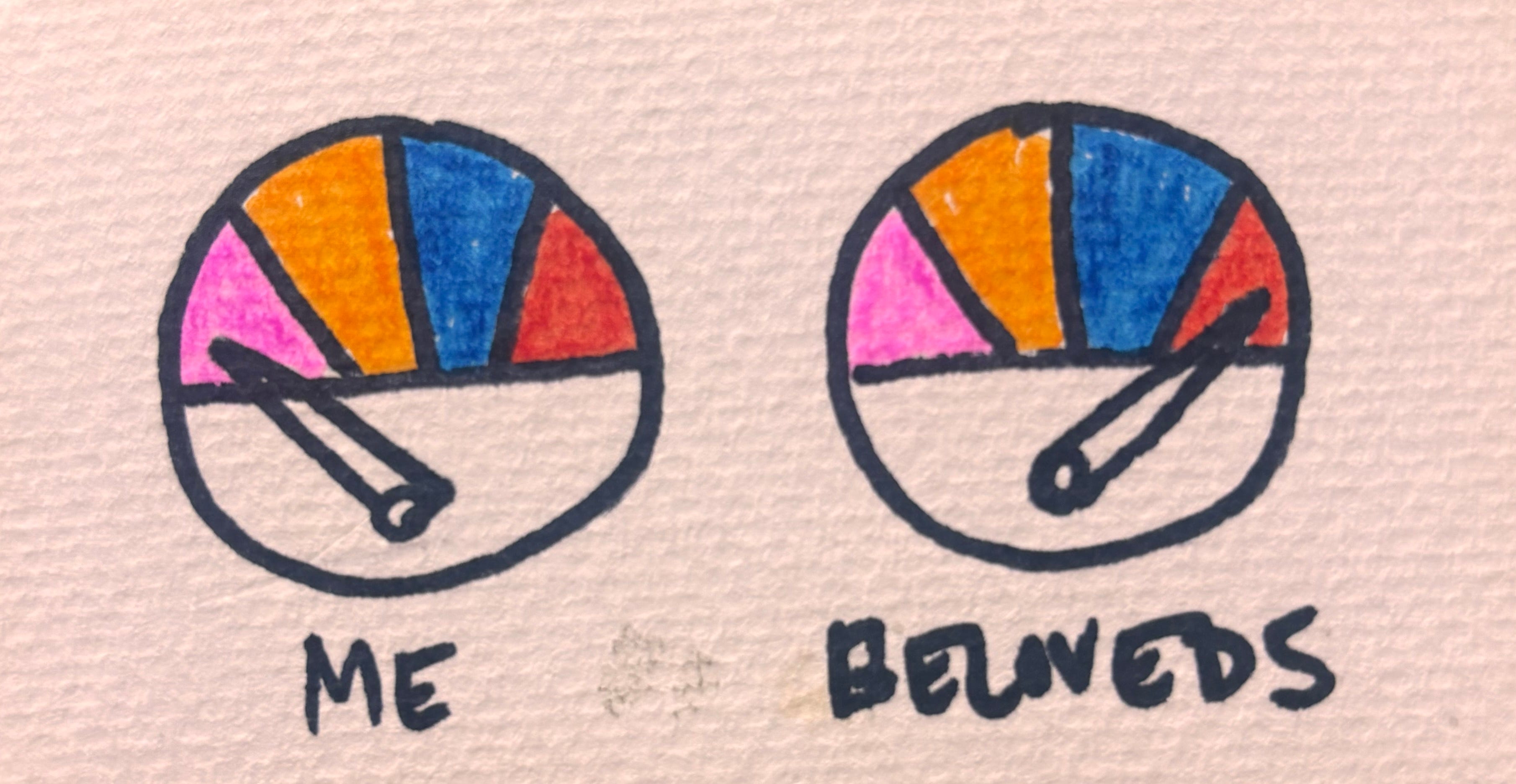
For me, the most challenging part of agency, is the self-knowing. I’ve spent many, many years with the dial on others’ feelings and needs turned up to a 10 and the dial on my own turned way down so as to not create any static. It’s worked well for me in so many ways. I am flexible and attuned and a good friend and a good mom. I’m proud of these things. And I also really want to change. I want to be able to access my own preferences and needs and wants and desires before they have to shout with resentful fury to be heard by me or anyone else.
I want to change because I know it is my birthright, no matter my gender, no matter my intrinsic flexibility, to feel like I moved through my life with sovereignty and care, solitude and connection, the pleasure of my own singular delights and the honor of showing up for those I love even when it’s hard. I’m thinking about birthright a lot as my dad is dying. Nicci Gerrard, in her beautiful book on dementia writes:
“For surely the endeavour–the never-quite-possible endeavour–for a carer is to tread the quicksand strip of middle ground between the abandonment of the self in the name of love and duty and the unyielding protection of the self in the name of survival. To both give and keep hold of the self, to accompany the person who is leaving while also staying behind. To have courage, stamina, compassion, empathy, to be in it for the long haul and yet not to be wrecked to the point of self-extinction…Health and survival can come to seem like acts of infidelity; to have a space for oneself a betrayal.”
I am trying to grow out of my own betrayal, to re-establish self-trust, to learn how to listen to my own body and psyche about what it craves and what it is genuinely flexible around. I am trying to chart a path of agency through the complex, harrowing ecosystem of my own relational rainforest of a life. It’s so beautiful here, but it’s overgrown. It’s hard to hear where all the signals are coming from, hard to sense my internal landscape when the external landscape is so varied and intense and gorgeous. I learned a new word while reading Is a River Alive? recently that feels like it is the terrain of agency that I am trying to travel to. It’s called inscendence. Robert Macfarlane writes:
“Where transcendence is the impulse to rise above the world and its cares—the weight of the body, say or the burden of mortality—inscendence is the impulse to climb into it, to fathom its depths and delve into its core.”
I don’t want agency that looks like rising above or separating or blowing it all up. I want agency that looks like diving in deeper so I can emerge even more myself amidst those I love. I want what I emerge with to be respected even if it’s confusing to those around me. And boy, does it confuse those around us when we change, doesn’t it?
I think inscendence isn’t about control, but about excavation. Emotional and sensory archeology. The dank, twisted quality of roots underground that link and share, erode and entangle. In this way, agency isn’t about my five year plan. It’s fungal and grounded movements towards what feels exciting, nourishing, and right for me.
My dad is dying. I will keep living. But I will now live with the visceral experience of the ways in which almost everything evades control, especially in the end. I aim to inscend, not transcend, this one wild and precious life. I’m still learning how.
It was a tremendous shock in professional coach training to discover that my idea of “helping,” aka trying to solve or fix or relieve or assume responsibility for other people’s issues, was in fact an insult to their dignity.
My role was to walk with and ask curious non-judgmental questions and support the coachee’s journey.
Incendence! Thanks for this “new to me” word.
This is nuanced and lovely. It hits me particularly because I’m writing a book about how much agency we’ve taken from kids in the past three decades—we’ve really upended childhood. Learning through independent play used to be a hallmark of childhood. It’s a vital part of how kids learn. Rereading your words about what control/agency feel like, it strikes me that the agency feelings line up with what childhood used to feel like, ought to feel like.
The watercolor image especially. 💕