

If you find posts like this help you navigate elder care in your own life, or make you a better friend or neighbor to someone who is going through it, consider becoming a paid subscriber. It helps me keep devoting the time it takes to connect the dots in my own life experience, sprinkle in a bit of research, and articulate it (AI free!) for you all. I so appreciate you investing in this space, whether it’s financially, through sharing it with others, or commenting and adding your own insights. Thank you so much.
The truth about the elder care journey is that it is as unique as the parenting journey. Each kid and caretaker are different and the alchemy shapes so much of the experience. For this reason, I have always really appreciated parents of only children who acknowledge that they have a limited perspective. If I thought parenting writ-large was defined by what I have experienced with my eldest child, I would be completely off-base. Thankfully I have two case studies to keep me humble about what a wide-ranging thing parenting is.
So forgive me for betraying my own wisdom here, but I have been thinking a lot about how much I might have been helped by having a more holistic view of the elder care progression.
I find if I don’t write these things down when they’re fresh, they drift away from me, so I’m offering this up now in case it is of use to the many, many people who have been messaging me about just beginning the elder care journeys in their own lives, often times with a dementia diagnosis.
Hold this lightly. I hope it is a reminder to you that, wherever you are, you won’t be there forever. One of the hardest parts about the “long goodbye” of neurodegenerative disease is that it can make you feel painfully stuck; you know you are on a train going somewhere, but there’s no view out the window.

Stage 1: Anticipatory grief & secrecy
This is when you have that first gut punch of realizing that something is off with your elder. Maybe they suddenly can’t find their way to a totally familiar destination, or say something really off-putting in a conversation that feels like a red flag. Maybe you visit their house after a long time away and realize that things are in the wrong places, or their hygiene has taken a dip they would never tolerate in their typical state.
Strangely, since it’s so early, this is one of the most painful parts of the whole process. It’s shrouded in shame and secrecy, and maybe some sprinkles of denial thrown in. You feel like you’re betraying them if you bring it up. You feel like you’re betraying them if you don’t bring it up. You might start trying to imagine the road ahead, or doing online research, or reading the wrong books, and it makes you feel like you might die of sadness.
I remember sitting at a coffee shop near my parents’ house in this phase, sobbing in front of my laptop. I tried to write about what I was feeling and ended up saving it on my desktop under a code word, black hole, as if even writing something like “dad’s illness” would somehow make it real.
AFGO (another f-ing growth opportunity): At this stage, your emotional work is to remind yourself that you are not alone, even if it feels that way, and try not to get ahead of yourself. Well, now that I think of it. That’s the AFGO for all of life, but especially at this particular moment.
The other thing you might remind yourself is that even the most painful of journeys have awe and meaning and intimacy within them. This one will be no different. Of course it sucks, but it won’t only suck. Breathe. Talk to people you trust. Understand that you can’t possibly anticipate what the experience will be like.
Stage 2: Reckoning & helplessness
At this point, you get a diagnosis of some kind. you might experience some relief here because you finally have a definition, and your big broken heart is convinced that definition means control. Great, a name! Now what’s the protocol! (Your big broken heart loves a protocol!) Who are the best doctors on this? Let’s go get ‘em. It’s not that there is nothing to do, but the things to do—when you have a deadly disease—are not as satisfying as your big broken heart might imagine. They don’t save your person or prevent suffering. They don’t actually make you feel all that in control. In fact, they might prolong your delusion of thinking the perfect combination of pills or PT or diet will make it all okay.
The other thing about this stage is, well, other people. My mom had some ideas about how she wanted to take care of my dad that differed from mine. But she was the boss, because she was his wife and she was with him every damn day, trying to help him have the best quality of life he could for as long as he could. I was hundreds of miles away with a lot of unsolicited opinions. When I would come visit, I would see how exhausted she was getting, and I would try to give her all my bright ideas, and they only seemed to make her more tired (not to mention, sometimes misunderstood or disrespected).
I felt helpless, and helplessness is my kryptonite.
AFGO: I hate to say it, but this is a time for serenity and loving witness. When I learned to answer my mom’s sad texts like, “Looks like Dad can’t go on his daily walks anymore. It was my one time alone, but it just doesn’t seem safe,” with “I’m so sorry. That sounds really hard,” things softened between us. (Previously, I would have said, “Let’s hire someone to walk with him. Want me to do some research?” and she would have had a million reasons why that wasn’t going to work and the exchange would have devolved into a stand-off between two very sad women.)
Depending on who you’re dealing with, brainstorming solutions might be a part of this stage, but the deeper wisdom here is attuned accompaniment. What feels most loving to the person doing the daily care? Do that, even if it feels anemic or wrong or painful.
Stage 3: Acute care
Okay, buckle up buttercup. This is going to get wild! This is where your elder is really losing foundational capacities. Think of it as a reverse adolescence—all the ways your teenager fights for independence and starts differentiating in reverse. Your elder has to give up independence and it sucks. Depending on their personality, it really, really sucks.
This is when you have to take away the car keys so they don’t kill themselves or anyone else. This is when you have to start meddling in their finances because elder fraud is so real and they need to start paying for professional care. This is where they might need to move—God help you. This is where you will start to relate to your phone as an emergency response system. Every time it rings, you will wonder what fire needs to be put out.
One of the hard parts of this stage is that it might feel like a massive pendulum swing. You were just feeling frustrated you couldn’t help more, and now you are being buried alive in administration and ADLs (“activities of daily living”—elder care jargon for wiping butts and fighting about pajamas). You wanted to be helpful, but you never imagined how much help would actually be required. You start to get a sinking feeling that you’re the wrong person for the job, except you’re an only child or an eldest daughter and feel oh-so-responsible.
Look to your family and friends. My mom, brother, and I had weekly care plan meetings at this phase and my sister-in-law took care of my dad while we did it. My husband drove my dad around at night and sang Tom Petty with him when he got particularly agitated. My daughter brought her grandfather little treats. Everyone can do something, even if it seems small in the face of such big suffering.
Look into day centers and profession in-home care if you haven’t already; both can make a massive difference, but are in short supply. Of course part of why you’re feeling bonkers is because you live in a country that doesn’t actually support elder care! Remember that next time you vote!
I also want to say this, which I wish more people had said to me, this part can be really hard on a marriage. For us, that was true for a lot of reasons. We moved in with my parents, so the proximity was undeniable. But it was also hard for a range of other reasons and I think this is very common and no one talks about it.
If you’ve got children, you may be starting to wonder about the long term impacts on them of all of your stress and spreadsheets. Will you attention ever be undivided again? Can you actually show up as a professional in the midst of all this toenail cutting and negotiating with terrorists (those terrorists being your tween and your parent with advancing dementia at sundown)?
AFGO: Honestly your job in this stage is just to stay alive. Your job is to cry in your car a lot. Your job is to do one nice thing for yourself every day, even if it's expensive or only lasts for ten minutes. Your job might be to get on meds.
If you have a spiritual practice, this is the moment to really lean on it. If you have a non-judgmental friend, call them before you have a cute story about what’s going on. Accept the meal train. Accept the neighbor’s offer of childcare. Accept that this will not last forever and that you cannot do it “right.” Join a support group.
If you can, and this is not meant to be a cudgel that you further abuse yourself with, only a reframe: remember that your time is better spent sitting than solving. Sit with your elder. Read to them. Do a puzzle. Hold their hand. Drive them around. Don’t try to be productive with them, or in your own life. Presence is better than productivity at this stage of life.
Did I mention, join a support group? Join a support group!
Stage 4: Call in the professionals
At this point, you might decide that your elder needs professional care around the clock. I’m not going to get into all the financial and logistical aspects of that decision here. I’ll tell you what my elder care doula told me that helped a lot: if you’re already thinking about memory care or assisted living, it’s probably too late. And no one ever takes their person to either place feeling like they are 100% ready for that transition.
I felt like a failure when my family and I finally acknowledged that taking care of my dad was no longer tenable for us. We had relocated to be together so we could be “the village” for my dad. I had written a beautiful story in my head about the “rising tide that lifts all boats” and intergenerational kumbaya and him dying peacefully at home in his own bed. Nope. That wasn’t the story.
You know what was the story? Acknowledging our own limitations—which turns out to be a sacred lesson. Trusting experts. Finding an elder care facility that fit my dad’s sensibility. Asking for and paying for help. A lot of it.
And discovering that it might be more beautiful than we could ever have imagined. My dad had a roommate who turned out to be like a brother to him. His agitation basically vanished after he moved into the community. It was like his whole body and soul settled down.
(This, of course, is not always the story. Too many memory care, assisted living and acute nursing facilities are understaffed, and those who are there are underpaid. This is why I’m so interested in the growing worker-owned care movement. This is why we need a national reckoning on the cost of elder care in this country, and innovation like federally funded longterm care.)
Of course this was a period of deep grief, especially for my mom, who had shared a bed with him for over five decades. Of course visiting him there was sometimes painful and often inconvenient. But there is nothing like the gift of knowing other people are taking care of someone you love when they are at their most vulnerable.
AFGO: Your emotional work, at this point, is to begin to let go while also figuring out a way to hold on.
For me, it came in the form of a sacred visiting practice. Every Thursday or Friday, I would carve out half a day to go sit with my dad and hold his hand. We would sing along with the volunteer who played the ukulele or just sit in his room and listen to music on my iPhone. We talked less and less over time.
Some days he seemed peaceful. Those days were really nice. I would lean my head on his shoulder and he might kiss the top like old times, and I could feel that it was almost like a meditation for us—this way of being together. Some days he seemed tortured—wild eyed and unable to stop moving, his eyes filmy and disconnected. I left those visits feeling tortured myself. I had to breath and cry in my car a lot. I would drive home in silence so I could let the shock and sadness have some space.
This is not the “right way,” just my way. Figure out your way. This stage could last much longer than you want it to. It certainly lasted way too long for me (18 months). What kept me going was the sense of ritual, my ability to focus on the community as a whole (especially on hard days, I would chat with other residents and care partners a lot), and my deeper knowing that it wouldn’t last forever.
Stage 5: Death
This is the only stage I can promise you is going to happen for sure. Elder care leads to death. When my dad was finally dying, I knew it in my bones. I don’t know if you’ll have that experience, but if you do, clear the decks and focus entirely on this very brief, very sacred moment. For us, it lasted four days. Four surreal and time-warping days.
Leading up to this, I kept wondering what would actually kill him. But in the end, it felt like he chose to die somehow. I can’t explain that. Doctors might say I’m delusional, but it really feels true to me. It was like a symphony of synchronicities and big feelings and conversations, and suddenly it was Monday late morning and my dad was dying. After anticipating it for so long, after willing it to arrive, it completely shocked me when it did even as I recognized exactly what it was.
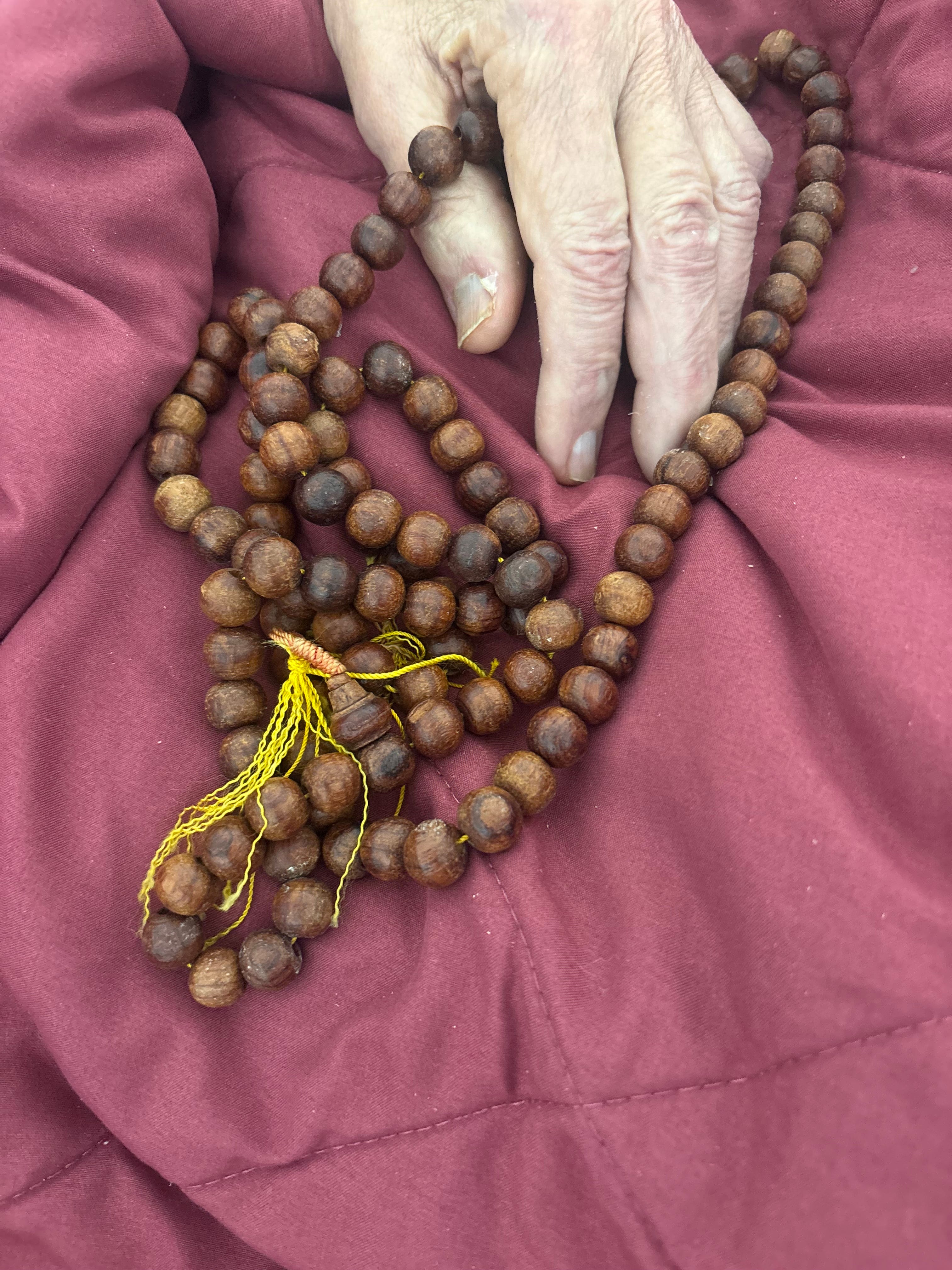
AFGO: All that amateur emotional work you’ve been doing to let go becomes varsity now. Witness and touch. Don’t forget to eat and drink water and sleep. Play music, say what you need to say right into the dying person’s ear, express gratitude to the professional caregivers. Let go. Let go. Let go.
This might help you do that: death isn’t final. It’s also a transition like any other. The last breath, the last heartbeat, means that your person no longer occupies their body. But they are in you and every person and landscape they touched. Sometimes, if your person has dementia, you actually feel them more intensely when they’re not longer in their bodies than you could when they were still lingering there. That’s been true for me. As I write this, my dad is smiling at me and I’m smiling back. He is amazed at how fast my fingers move across the keyboard.
Stage 6: Ritual, Grief, & Relief
Now is the time to grieve, each in their own way, acknowledge relief, in my case, even euphoria, and stay together. You will have to deal with some logistics here — the cremation or burial, the donation of organs, the writing of the obituary, if possible, the decisions about funerals or other rituals that will help your circle of family and friends honor the loss. Eventually you will have to deal with the death certificate, the finances, social security and the like.
Take it one day at a time. You might need to sleep a lot. You might need to cry a lot, or you might not have as many tears as you think you should. No shoulds here. Whatever you’re feeling is fine; the point is to be gentle with yourself and those around you. People have all different relationships to the body, all different ideas of where the spirit goes. That’s okay. It’s a big ol’ mystery and you each get to hold it in your own weirdo way. If anyone makes you feel otherwise, take a little space from them. What you need now is what you need now.

AFGO: Accept yourself. Maybe even be proud of yourself. Try to stay in your body and feel what it feels. Stay slow — don’t rush back into life. Give the grief time to emerge and work on you (this is just the beginning of that, of course). If you can tolerate it, be in community (little or big). Let yourself be seen. Let yourself tell the story of the death. Let yourself relax and stop looking at your phone. There are no more emergencies right now.
Stage 7: Care hangover
This is where I am now—sort of looking around and wondering what the hell just happened. (And thus, why I am writing this now for you! And me!).
The last decade has been laced with sadness, shame, fear, and helplessness, as well as awe, deep gratitude, and surprise. The last few years have been the hardest of my life—I have cried and yelled more than at any other season. I have felt more out of control, less effective, and more stuck than at any other time in my life. I have been profoundly overwhelmed. Next to the birth of my children, I have never been so close to the sacred. I have grown up.
AFGO: As I continue to grow up, I am holding a new question: what needs repair in my relationships and what will be healed by time? This is a new version of the question I am always asking myself and will for the rest of eternity: what is mine to do?
I am also staying connected to my dad. I’ve got a picture of him next to my toothbrush that I look at each day. I am tuning into his smile as it radiates at me and smiling back. I am talking to him every once in awhile. I am plotting getting my first tattoo with my brother in my dad’s honor. I am especially filled with a private little heartsplode every time his old watch beeps at 9am in the kitchen drawer. Hi dad! I say — sometimes out loud, sometimes in my mind. This is the work of staying connected, and it is work I welcome and enjoy deeply.
So, what did I miss? As stated, I’m a newbie here and hope others will confirm, complicate, and add to what I’ve written here. Love to you wherever you are in the journey. You are not alone.
Timely article - thank you for sharing your experience. Three years ago, my spouse and I gave up our lives and moved from California to rural Florida to take care of my elderly mother. She's always talked about her fear of dementia, and her fear came true. Her dementia started slowly; we had no idea what was going on, and it accelerated quickly. You're right; I feel painfully stuck. I know I'm going somewhere, but I have no idea where. I feel like this is purgatory for my mother and for me. This really is a long goodbye, and it's painful. I'm actively researching long-term care now, and you're right: I'm already too late.
This is a vital time, and I always appreciate your sharing your particular experience.
I also appreciate your saying upfront that what may be possible in one person's life may not be in another- the flexibility to defer paid work or to determine where to squeeze it in, the number of people also helping and how they all get along, financial resources to pay for help or networks that help in an uncompensated way...
Some years back when, in fact, no one I loved was dying imminently, I read a book about being a death doula. In fact I have read a couple of books about such accompaniment, both as an accompanying third party and as the daughter of someone dying.
To some it might seem gruesome to do this sort of work in advance, but this is one of the big constellations of ideas that are part of having a philosophy of how to live in the world.
I have recommended before the one by Joan Halifax. Frances Weller is another. There are others.
If I could underline one thing in what you have written, I would say that you can plan how you want to do this, but it is best to hold going in the idea that really, like in much of life, one must be prepared to realize in the midst of things that what you had thought and hoped was possible for you as a family no longer seems viable for you. And then go ahead and alter course.
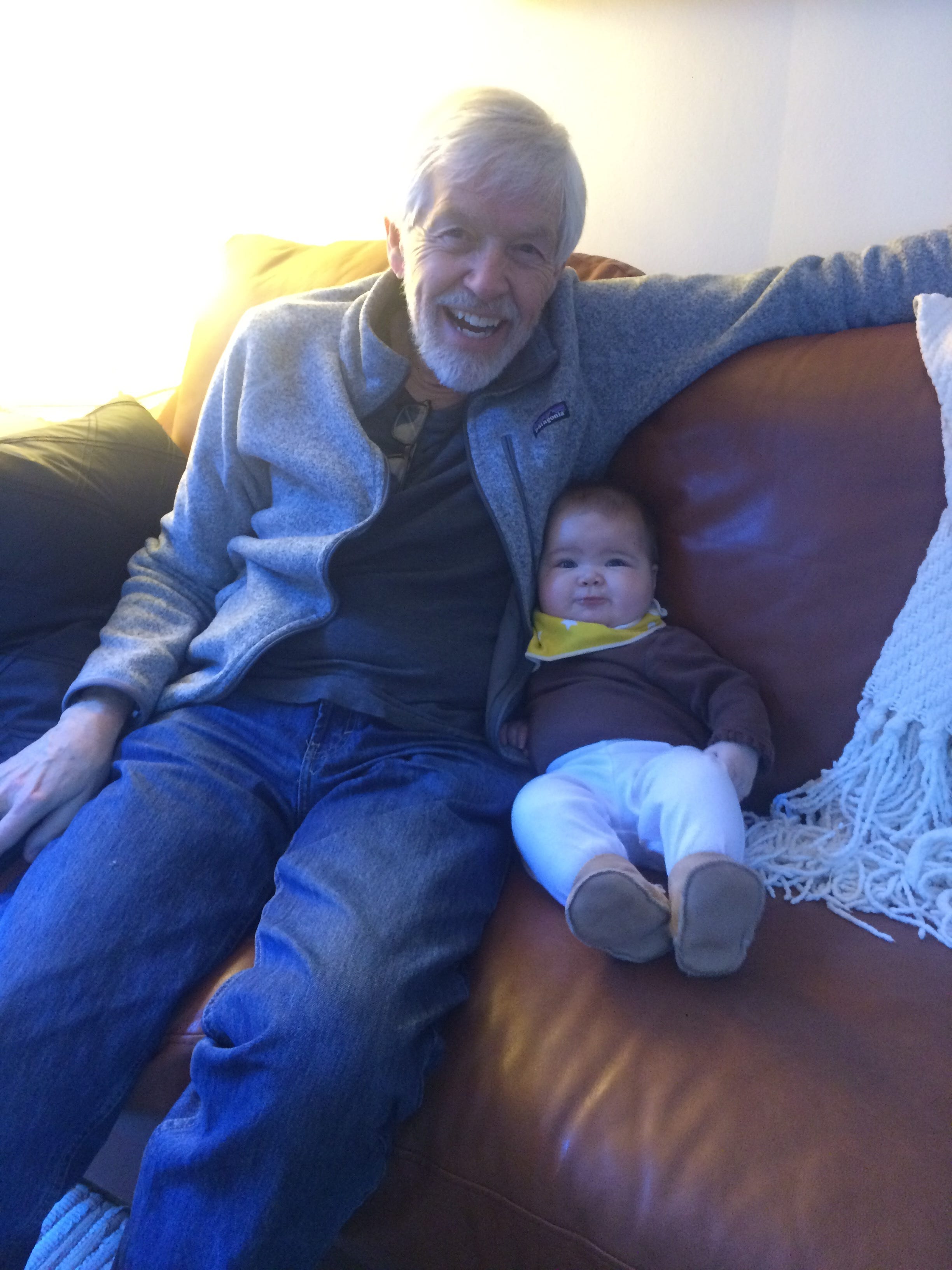
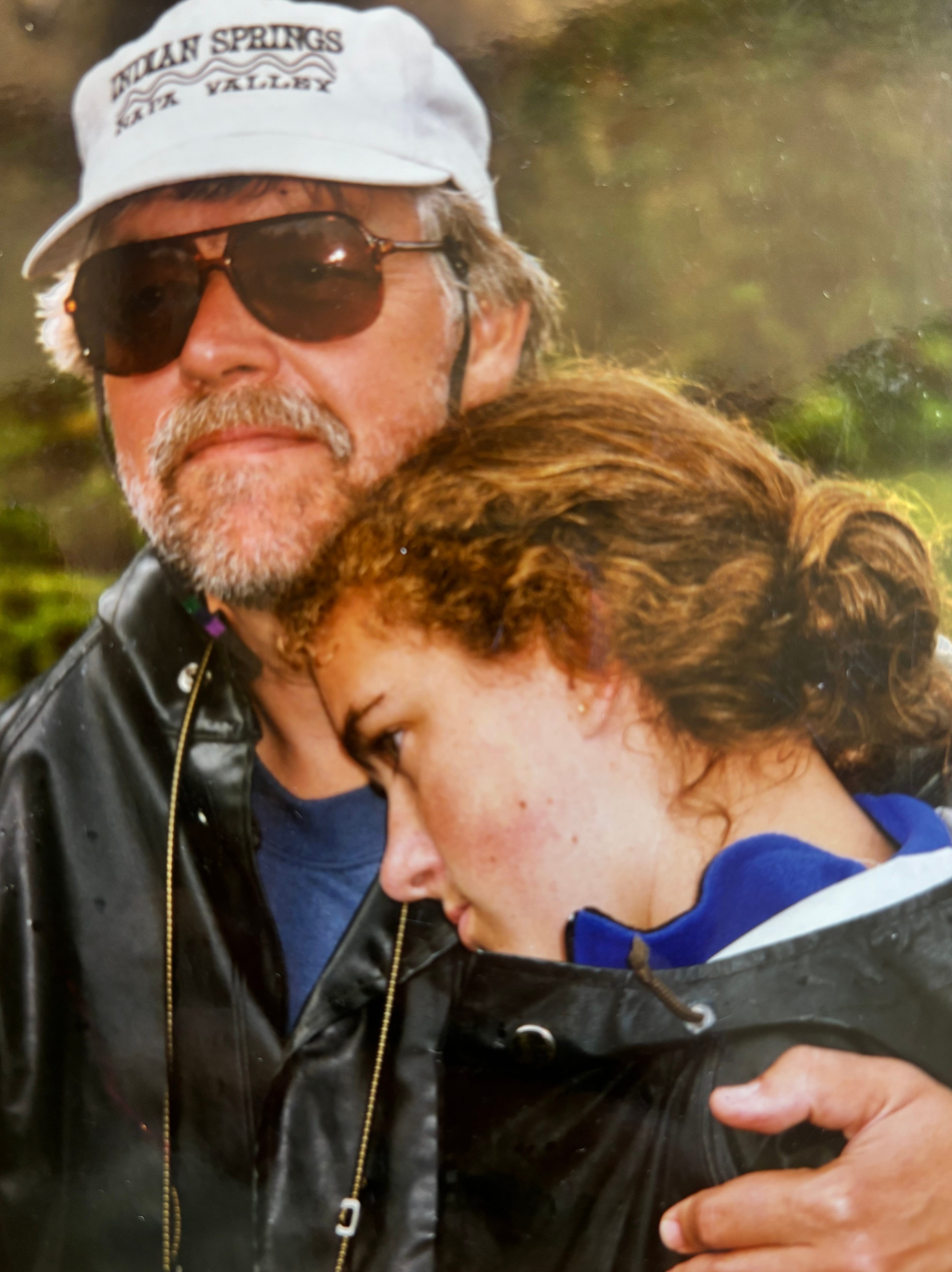
And I must add how very much I love that photo of your Dad and Stella. What faces!