

My dad, like more and more of us, didn’t want a traditional funeral. He didn’t want to have an open casket or be buried. He didn’t want to have a bunch of people in suits that made them hot and itchy sitting through a ceremony that they didn’t relate to. He didn’t want long, aggrandizing speeches or mountains of food no one eats because they’re too sad.
What did he want?
Well, we never really got around to asking that in a detailed way when he was still of sound mind and body. We knew he wanted to be cremated. We knew he identified as Buddhist. We knew he loved us with all his heart. The rest was a bit of a guessing game.
I think this is happening more and more these days—both because of the infamous rise of the nones (those who don’t identify with a particular religion, 28% of U.S. adults at this point), but also because of the culture of the Boomer generation. They tend to be free thinkers, anti-institutional, and move around more than their parents might have in the later years. My parents, for example, lived in Colorado Springs for over 25 years while raising my brother and me, then moved to Santa Fe to pursue their dreams of living in the desert and having an art-filled existence, then moved to central California to pursue their dreams of living by the ocean and having a simpler life as they aged and my dad’s dementia symptoms got worse. By the time they landed with my family in the Bay Area, they had very few local friends, much less a religious community to call their own.
In any case, when we met with our local mortician—a guy who reminded us of Ted Lasso as he took his job very, very seriously, but with a big ol’ smile—he mentioned that it’s not typical, but some families create a ritual around the cremation itself. He warned us that it was an industrial room on offer—nothing like the fancy ambiance of a funeral parlor—and, as such, was a bit informal and could be loud. My mom and brother were inclined to pass, but I felt an immediate intuition that it would both be good for our family to have a tangible, physical ritual after such a long, drawn-out disease, and also that my dad might be kind of into the unadorned nature of it. He was drawn to “real talk”—like the Red Letter Bible, where Jesus’ words alone are printed in bright, red ink. What could be more real than an industrial room where his body became ash?
The family bravely followed my lead. We decided to involve my dad’s four grandkids (who called him “Didop” and range in age from 9 to 13) in the design of the ritual. We gathered around art supplies and cheese (one must always involve cheese when possible), and discussed. The Ted Lasso of morticians told us that we could say something and/or burn symbolic objects (as long as they weren’t plastic) with my dad’s body, so we had some things to figure out.
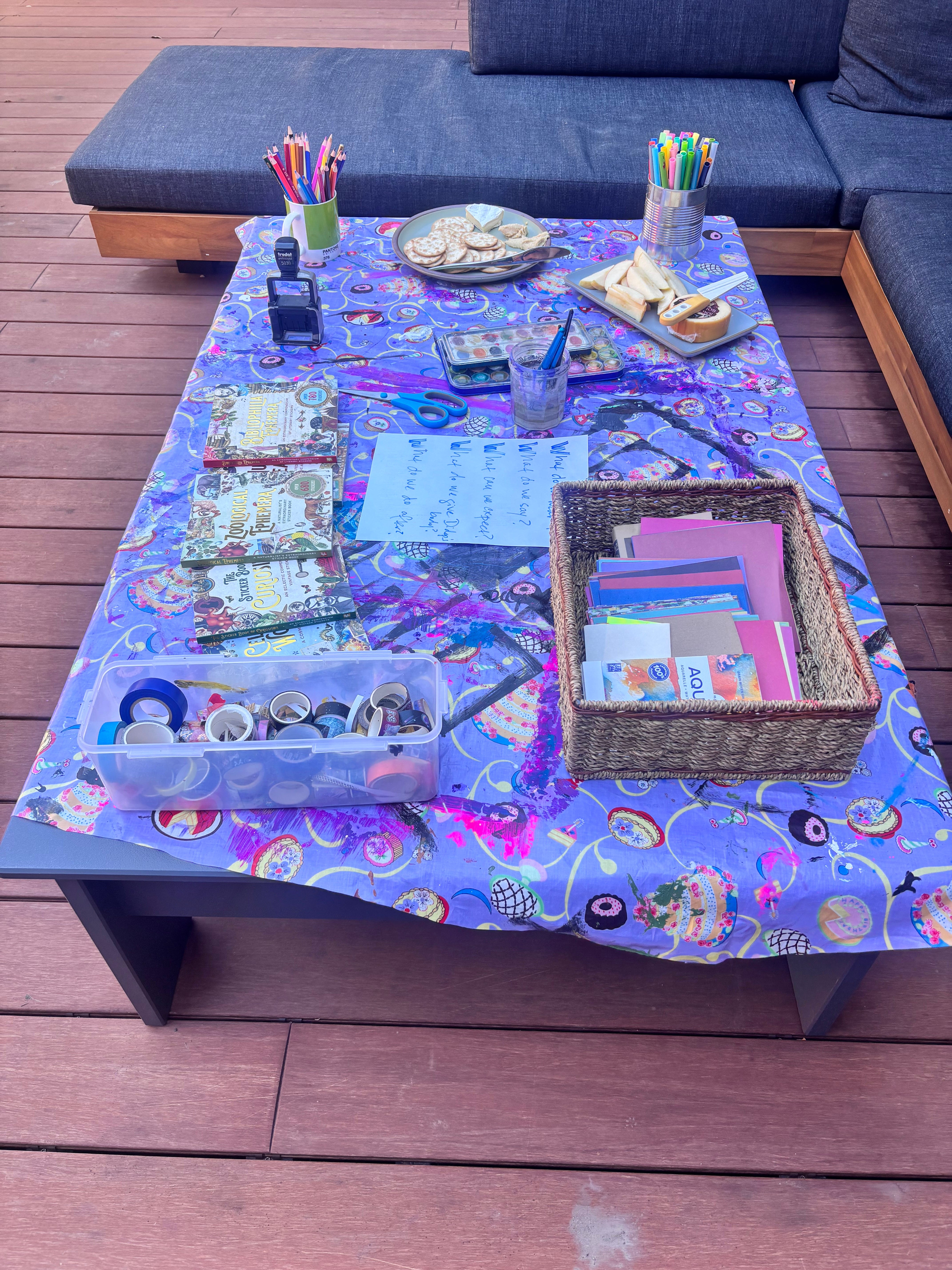
It was intimidating in many ways, in part, because it wasn’t a ceremony that any of the adults had ever been a part of either. We were all newbies at this. But we embraced the collective “beginner’s mind”—another thing my dad would love—and started with what the heck our questions were about the ritual.
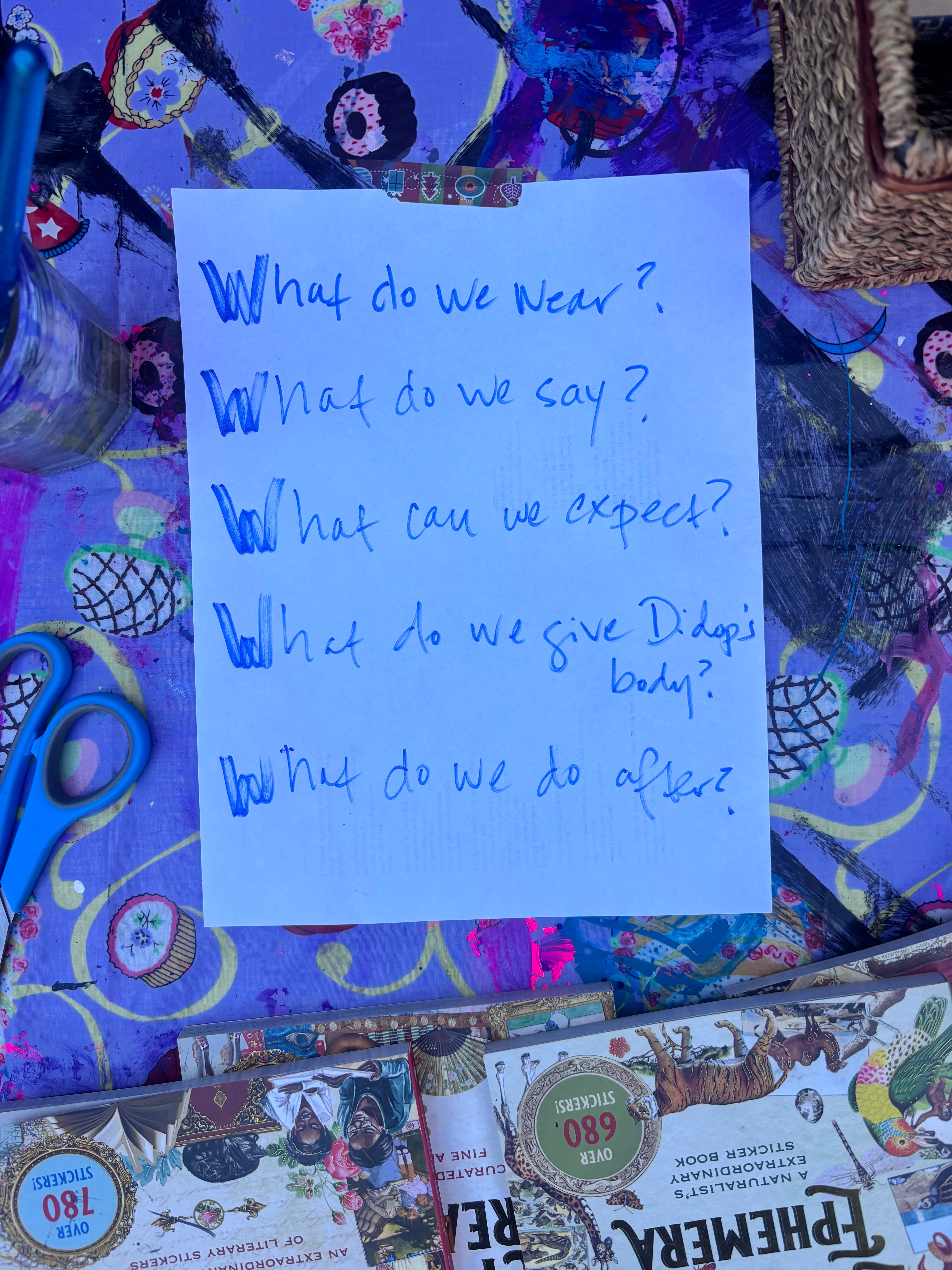
Listen, the kids weren’t all equally into this process. (The adults probably weren’t either.) But as you might imagine, my little Stella is a ritual fan and my increasingly big Maya has a real reverence for big existential moments and her grandparents. My brother’s sons were less attentive to the design of the ritual, but deep feelers day of. We proceeded with the wisdom that there was no wrong way to show up, which was reparative for those of us who have been subjected to the more rigid and fake aspects of organized religion. Our decisions:
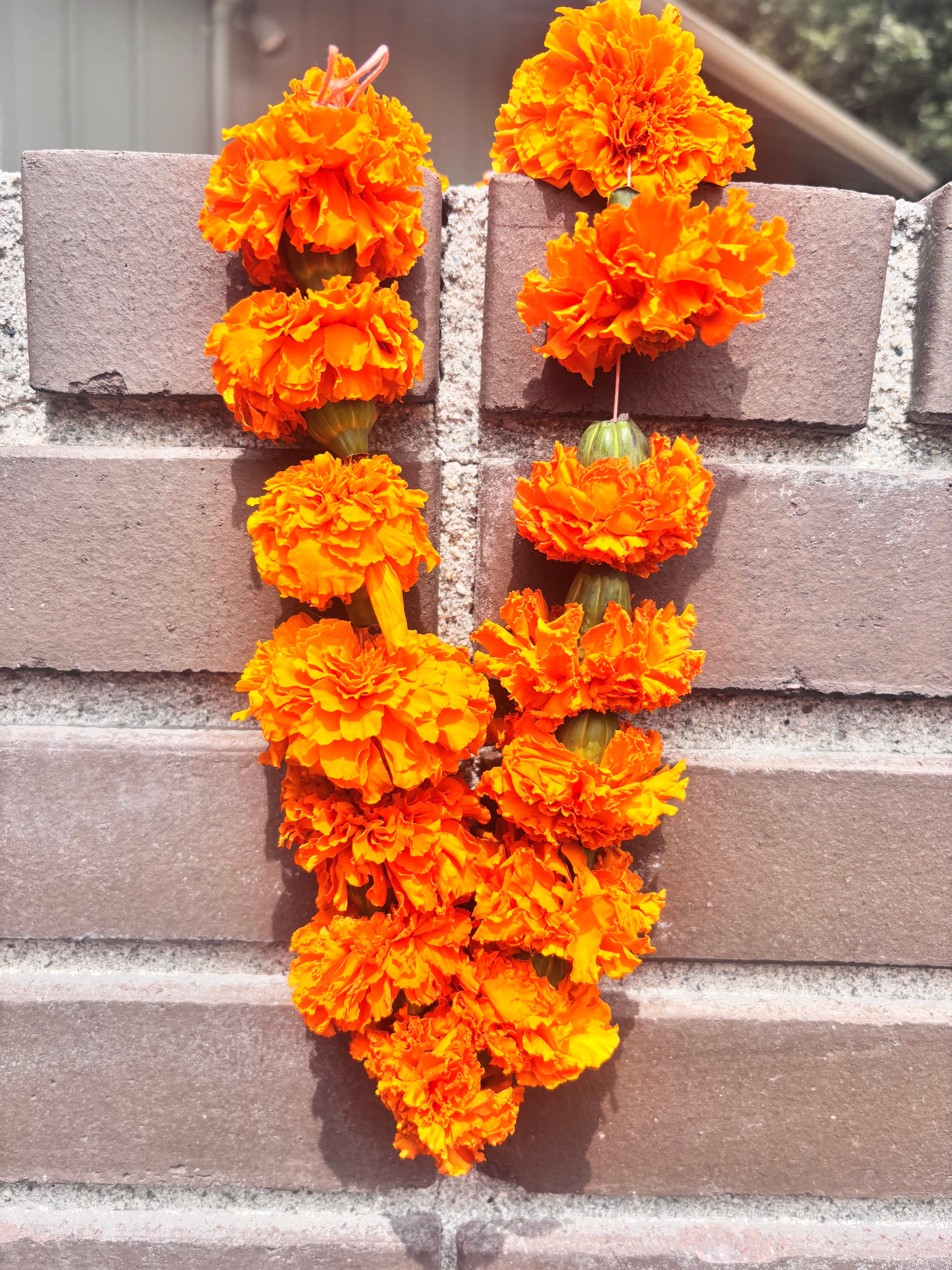
What do we wear? Whatever we feel good in or we think Didop would love. We made some marigold leis, too.
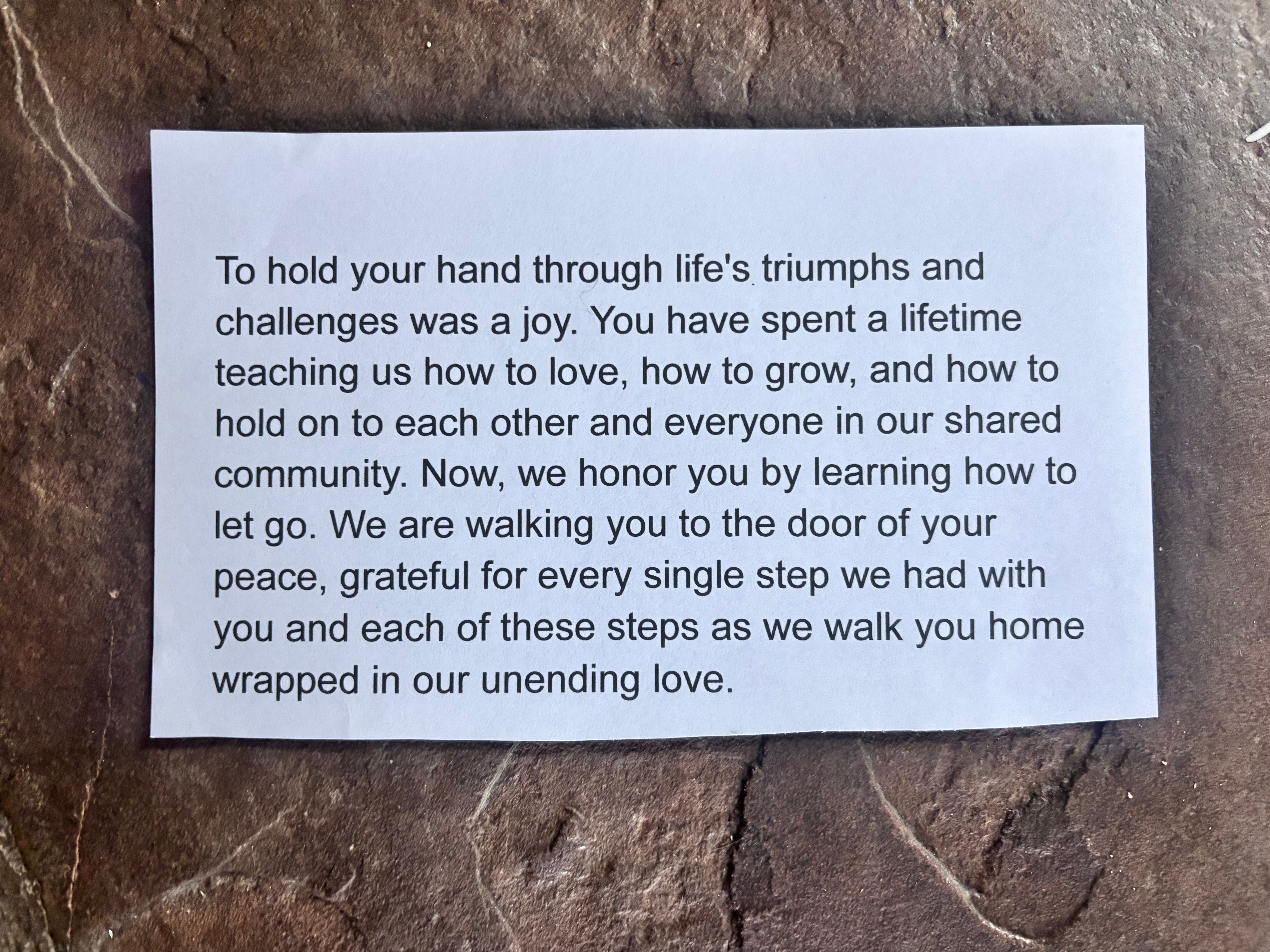
What do we say? My mom wrote a gorgeous blessing for his send-off. We weren’t sure who would be able to keep their shit together long enough to actually voice it, but we figured that between the nine of us, someone should be able to manage.
What can we expect? Industrial room, Didop’s body in a simple cardboard box, some kind of cremation oven, Ted Lasso of morticians.
What do we give Didop’s body? Anything that feels meaningful to us. For my mom, it was a lock of her hair, a picture of her and my dad together, and a note saying she would love him forevermore. For my brother, it was one of my dad’s pipes, a handful of puzzle pieces, and a blackbird feather. For me, it was two things: a Pema Chodron quotation since my dad and I read Pema together a lot in his final years and a sticky note with a lesson he’d taught me that I thought should die with him because I don’t want to live by it.
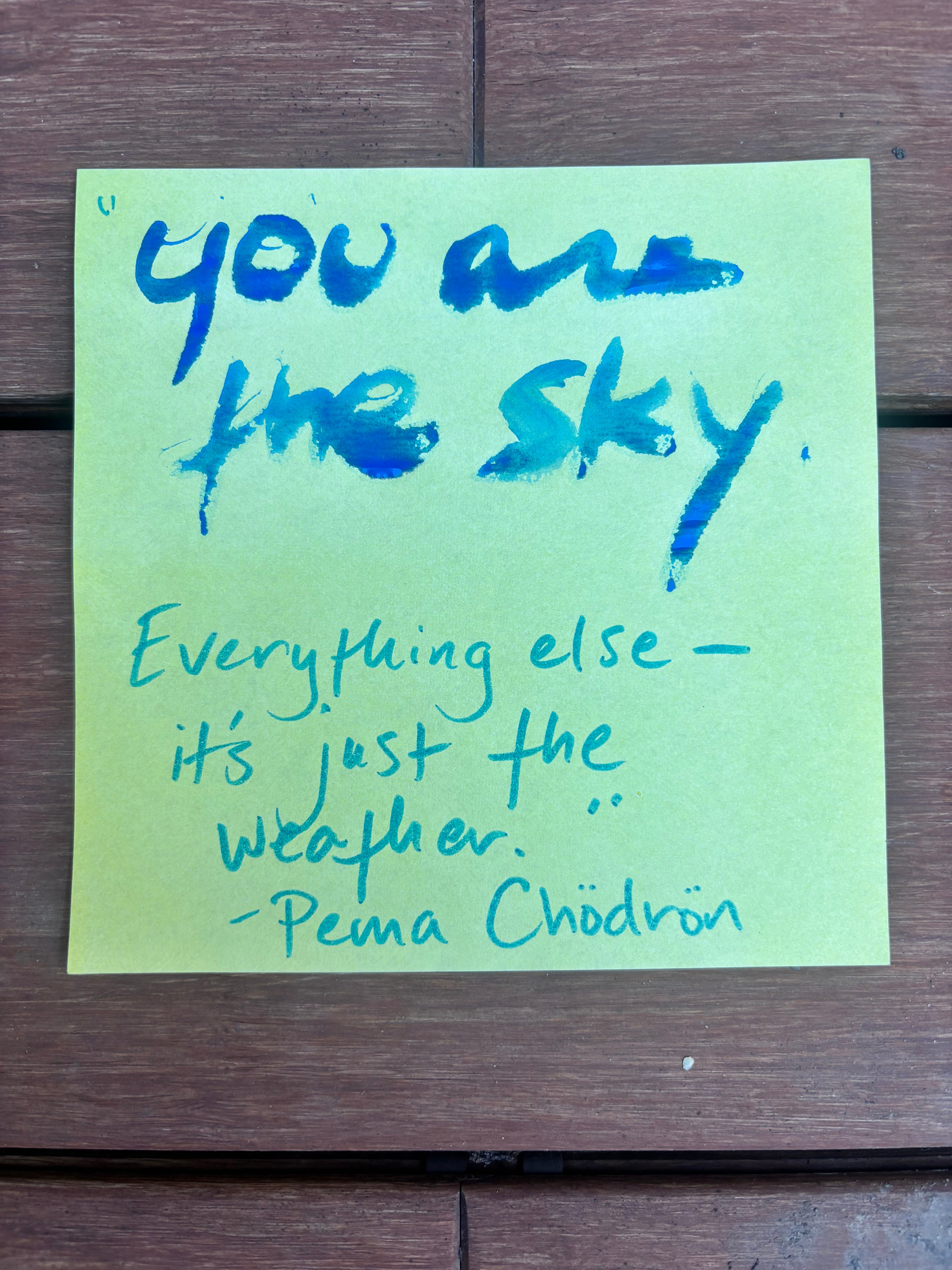
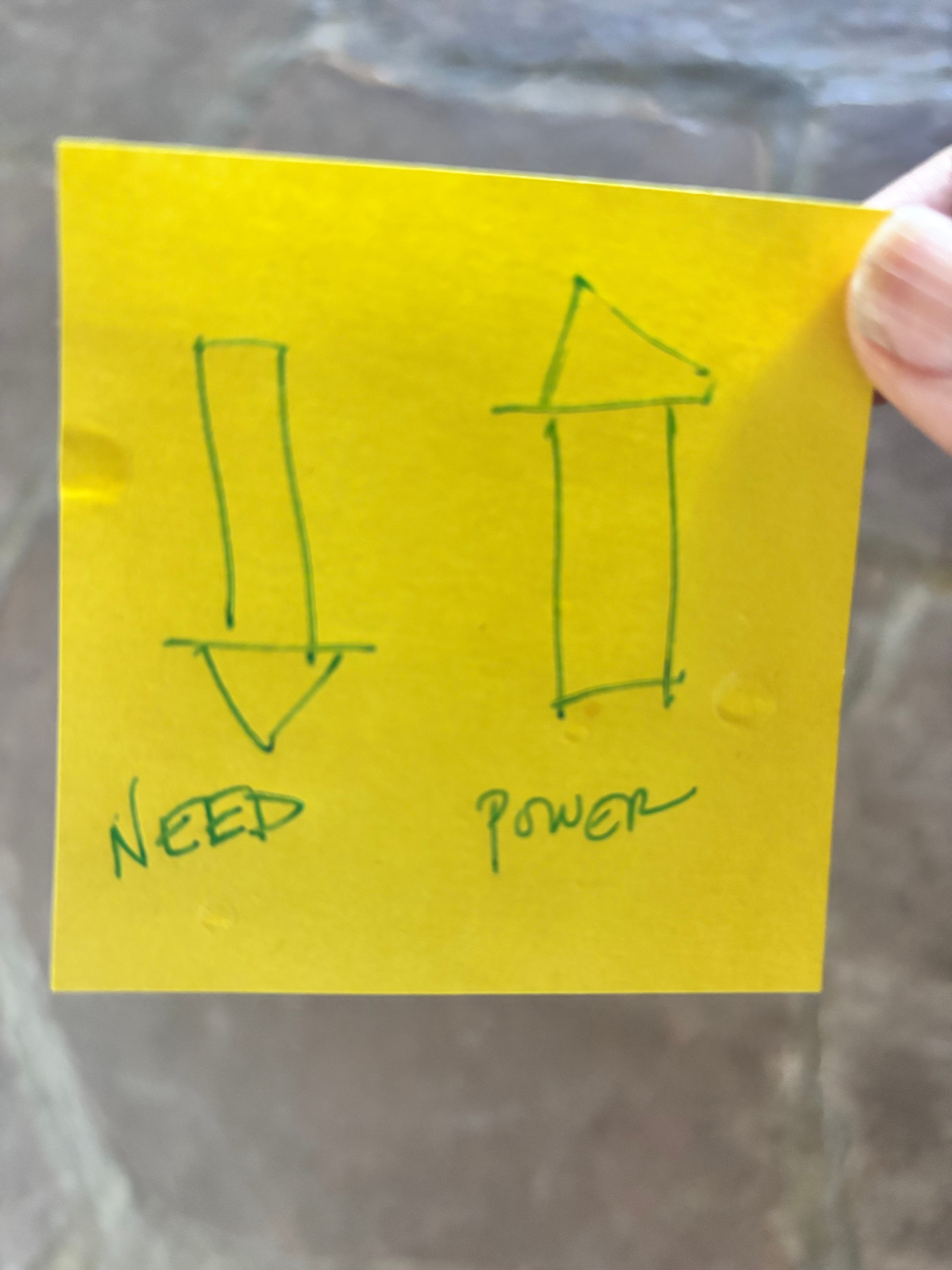
A quick note on this, as it does need explanation: There were many times when I was young, when my dad would draw two opposing arrows on a napkin or piece of paper and tell me that the more I needed the less powerful I would be, and visa versa. What I have learned, ironically in large part because of caretaking for him during the most acute phase of his illness, is that the more I acknowledged my own needs, the more people showed up for me, and the more people showed up for me, the more powerful we all were. Need, if honored, leads to connection, and connection is the ultimate power in my book. I think he harbored this belief because of his childhood, where he had so many needs that went unacknowledged, and maybe it did serve him in some ways. But it doesn’t serve me, so I let that idea die with him.
Stella, in contrast to my grown-up seriousness, tucked a Trader Joe’s ice cream cone into her grandfather’s cardboard coffin, because Didop used to steal hers once his disease progressed and he no longer understood “mine” and “yours.” A cremation cream-based peace offering.
What do we do after? Well, first we had a spontaneous group hug outside the front door—the littlest spitfire of a red-headed grandchild in the center of our bodies, crying the hardest—and all talked tearily about how he would always live on in each of us. Then we decided to walk across the street to one of our favorite local restaurants and eat pancakes. My mom pulled $100 out of her bra and gave one to each grandchild—from me and Didop, for anything your hearts desire. They grew wide-eyed and said thank you to their beautiful, weepy Oma—who, by the way, was the one to recite the whole blessing (OG). We talked about how much he would have loved the punk rock nature of the ceremony—just a simple cardboard box with his name scrawled unceremoniously on the top with permanent marker and the way the two guys who worked at the mortuary seemed to sort of slide his body into oblivion upon our signal.
Maya went back to junior high. Stella and I headed to Target and she immediately spent all her money on dolls and Sunny D. I bought my mom a handle of Tito’s vodka and a psychic reading. We all mourn in very different ways, but I deeply believe that collective ritual is key to our intergenerational wholeness. We don’t have to know what we’re doing, as long as we figure it out together.
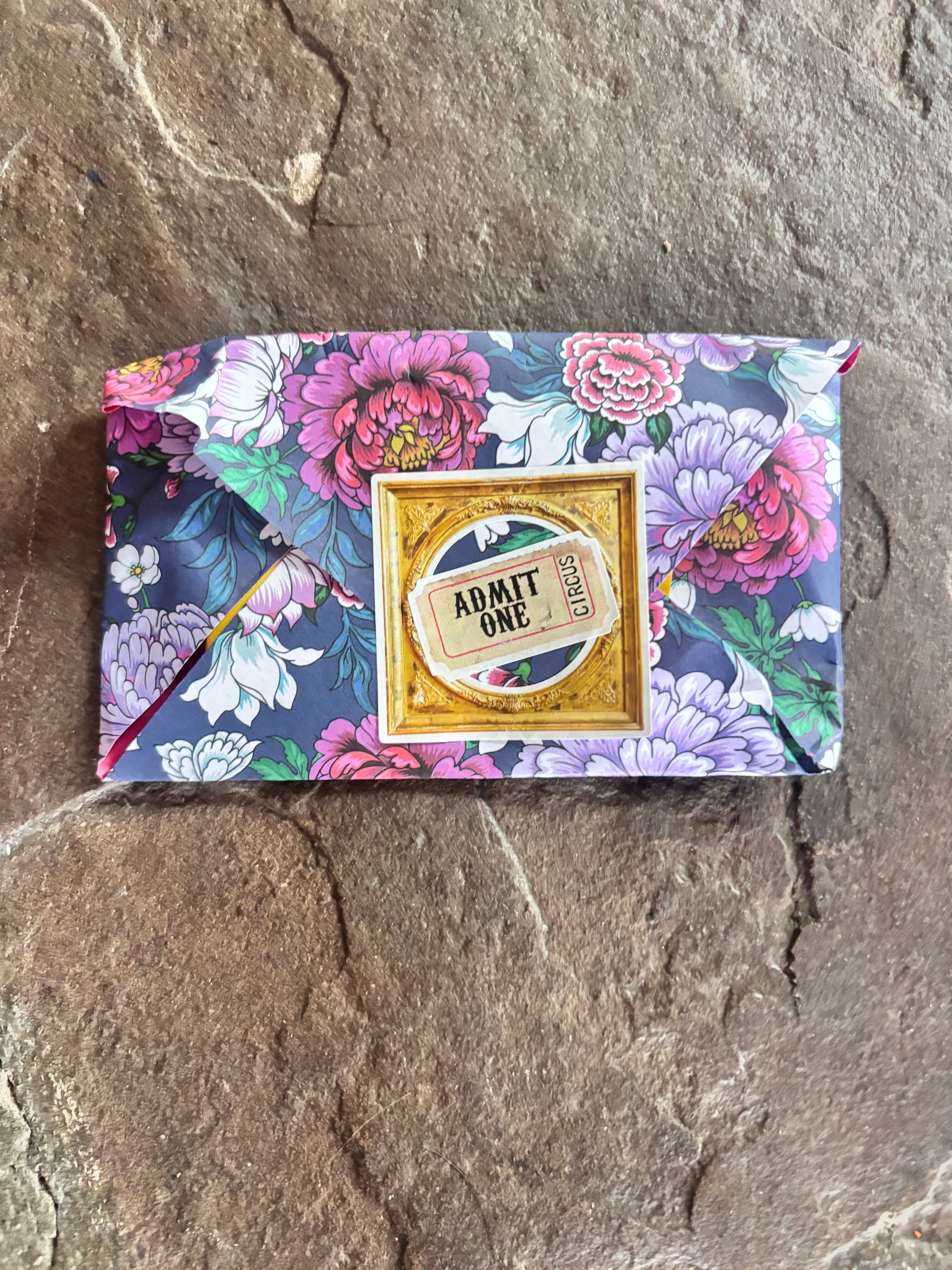
This whole experience has made me think non-stop about all the lost rituals of the pandemic era and the long tail of suffering that has resulted because of them. It’s estimated that 180 million died during those years of a variety of causes. Some had zoom funerals, I know, and I’m sure many of them were very meaningful—so meaningful, in fact, that hybrid funerals (in-person and on zoom) continue in this era, allowing far flung relatives and friends to participate.
But what has been lost psychically and generationally, because we have been prevented from having physical, collective rituals or neglected to prioritize them in some cases? What healing have we delayed? What connections have we fractured? Is it possible to reclaim the need for these rituals, perhaps even doing them many years after our loved ones have died?
I’d love to hear your thoughts.
Thank you for the details, and the spirit of your writing. I agree so much with the statement about need and connection and power.
I would like to share the details of a made-up ritual for my sister who passed away in 2019. It's described in the prose-poem below. She outlived her two sons, an enormous sadness that she bore, more than anyone should carry.
A coda: the stones described below were indeed set by the ocean, maybe in 2021--- in the shape of a mandala-turned-starfish-- and claimed by the tide in a great felt whoosh. Smaller versions of the stones were made into strings of beads that I keep and give away.
~~~~~~~~~~~~~~~~~~~~~~~~~~~~~~~~~~~~~~~~~~
Making It Up
Gather kind people, horses, stones, whatever’s blooming on that ground where you still feel her. Summon with flute and drum. Sing. Say something. Sigh.
Open each box of ashes - hers, her horse’s, her dog’s. Pour them all into a big blue bowl. Stir. It’s OK to use your hands.
Walk together between the pines. Touch the long soft needles that reminded her of hair, her boy's hair.
Take turns scooping and flinging the mixed ashes. Try not to work against the wind. Squint your eyes and nostrils if you need to. Repeat as often as possible.
There will be too many ashes. Transfer some to tiny jars. Encourage people to take them home, to hold or release. Before they go, eat blueberries together.
Months later, sift the remaining ashes into another bowl. Mix with equal parts marble dust and rice paste. Take a lump - about the size of your mother’s Christmas cookies. Press it between your hands. Work it until it is smooth all around and firm.
Set each one to dry in a window. Next day, polish each one with fine grit til it gleams white and feels like a sea-sculpted stone.
Place them in a silver bowl. Keep them nearby on a table or piano, in the midst of things, in sun, in shade. Arrange them in circles from time to time. Rehearse for the day you will set them by the sea. Imagine the tide taking them. Imagine them dissolving in its salty expanse.
Such a big YES to rituals—-real embodied ones! Thanks so much for sharing Courtney—as always—your journey, stories, voice—creates ripples of ideas, “Oh yes let’s think about that anew”, and love flowing in the most unique ways. I think your dad would love knowing that his journey did that. With a big ‘ol grace-filled curious smile. And a cowboy hat doffed. Super well well well done my friend. Tears blessing, hearts tugging, intuition knowing, and finding our way as the beginners we are——that’s sacred stuff of beauty and grace—-and memories made too—-of/for our lifetimes into the wild unknown. Extra joy as you point to community, being, togetherness, each in our very own way. Flinging love from the Rockies for/to you and your family! Xo