

If this newsletter connects you with awe, which I’m really crossing my fingers it does, will you please become a paid subscriber? I makes my work here possible and is such a deep calling of catharsis, connection, and delight for me.
The way the Redwoods rain in a fog. The spontaneous altar of some mysterious kid that my kid and her friends made. When I asked my dad last week, “How are you doing?” and even though he has so few words left he answered: “Playing.” The way I keep running into the midwife that delivered my eldest only when I am out on the town with her and my mom. The story my friend told me about feeding her dying friend shashuka. The haunting of crows. The relativity and elasticity of time.
What does all this have in common? It elicits awe in me. I’m kind of an awe junkie, truth be told. And I’ve found that my relationship with my beloveds—especially my kids—is one of the fastest, most consistent ways to get in touch with something bigger than myself. Pregnancy blew my mind—the way in which my body was building another body while I was just walking around!!?? The intricacy of that build—the tiny organs and appendages, the kicking, the practice breathing!!?? And then they arrive and every single day learn more and more about how to ambulate and eat and name all the things in the world!!?? And then they become 11-years-old and wear pimple stickers and roll their eyes at you and you can look at a baby picture and see their exact essence embedded in the tiny features there!!?? WTF?
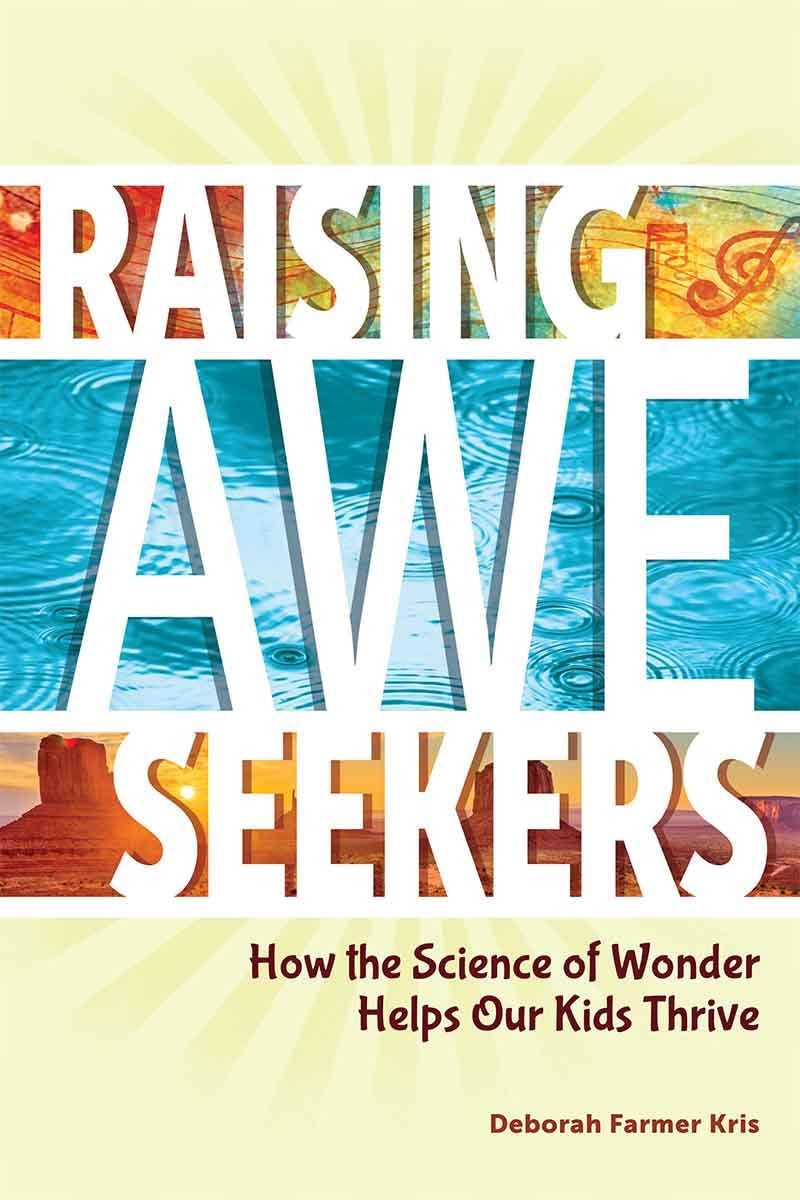
Awe is truly one of the best parts of life for me, a state that I know I will be most grateful for having experienced when it is all said and done. Which is why I was really attracted to child development expert Deborah Farmer Kris’ book, Raising Awe Seekers: How the Science of Wonder Helps Our Kids Thrive. It seems like an evergreen topic, but also one even more urgent in these times when awe must be a counterbalance to all the depravity we are confronting in the world. Awe makes it possible to get out of bed in the morning when you know the planet is in such a perilous state. Both need to be acknowledged to keep going.
So without further ado, meet a woman committed to helping us access our awe, Deborah Farmer Kris…

Courtney Martin: I love this book! What a gift to us all. How do you think about the relationship between awe and delight? (I am a huge fan of Ross Gay's work around noticing and honoring delight in our lives, even and especially in hard times).
Deborah Farmer Kris: When I started writing this book, a friend gave me a copy of Gay’s Book of Delights because she immediately saw the connection between his book and my “awe diary” practice.
Both awe and delight ask us to pay attention: to tune into our senses, slow down, notice. Awe allows me to live in the “and” space. Yesterday, I spent way too long doomscrolling and a red-throated hummingbird hovered near my finger. My back hurt when I woke up and I heard a song on the radio that gave me the chills. As I often find myself saying, “This world is hard. And this world is so, so wonderful.”
That’s the gift of both awe and delight.
Can you tell us briefly about the seven sources of awe that you structure the book around?
When we think about what makes us feel awe, our minds often jump to nature – that really is such an obvious and omnipresent resource. But several other types of experiences that elicit this emotion. Beyond nature, these include:
Music: Song is a baby’s first language, and throughout our life, music has this fascinating power to transport, energize, and even heal us.
Art: Making art, seeing art, and experiencing the wonders of design. And this isn’t limited to museums – it’s street art, community murals, architectural spaces, earth art, picture books, fashion, etc.
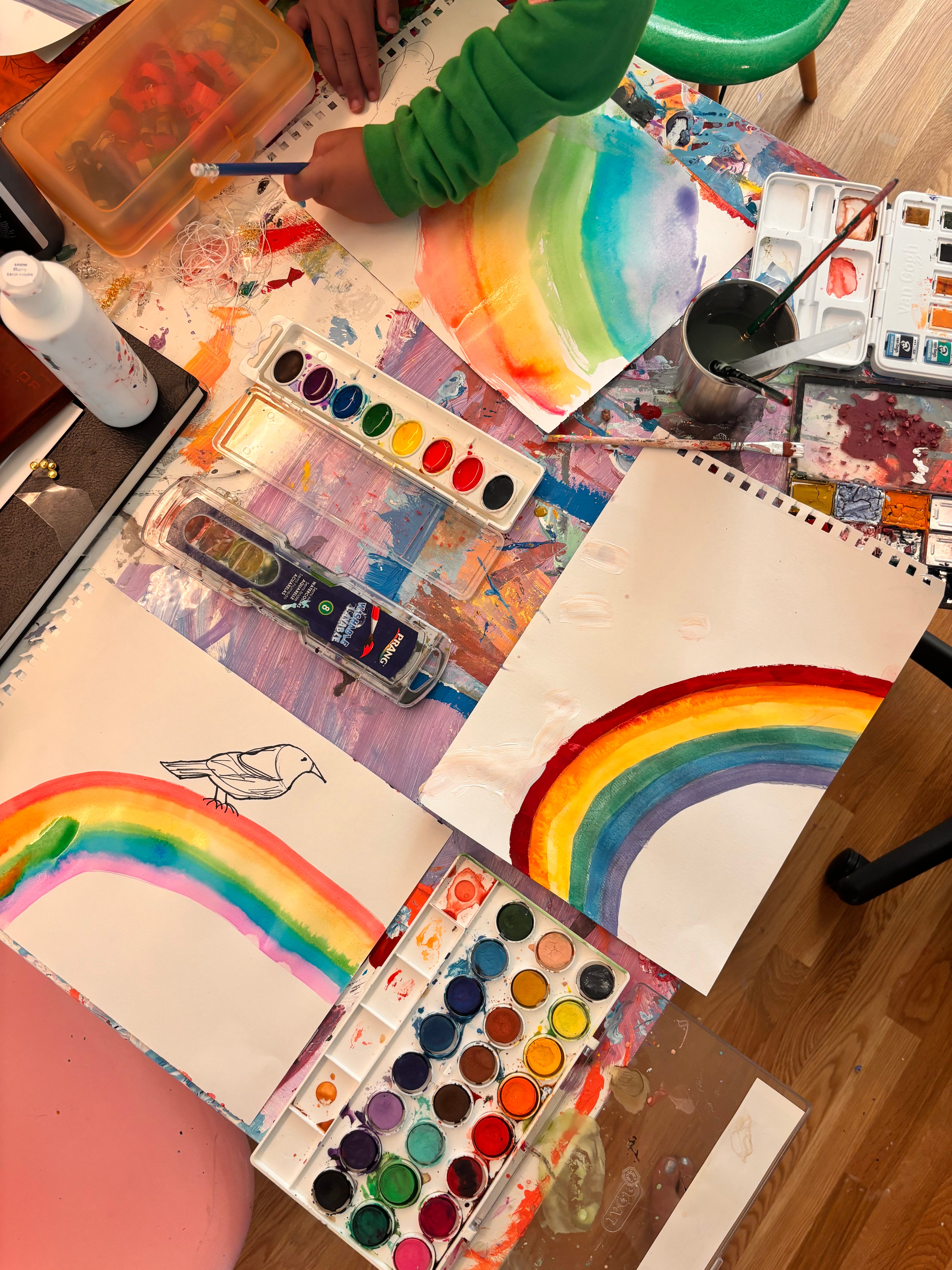
Big Questions: When I was a teacher, I loved seeing my students’ faces light up when they learned something that expanded their understanding of the world. I try to keep that spark as an adult. Pondering big questions — and engaging with others who are doing the same — can put us in touch with meaning and cut through our sound-bite society.
Collective Effervescence: This term describes the feeling of being part of a group that is working toward a common, meaningful purpose. This might look like joining a civic organization, a choir, team, or a book club. It might also look like cheering on a local sports team with the rest of the fans or participating in a ritual like a wedding or bar mitzvah.
 Tiktok failed to load.
Enable 3rd party cookies or use another browser
The Circle of Life: Birth and death. The delight when we see a baby’s tiny fingers and the grief we feel when someone dies. Intergenerational relationships — including learning about ancestors — remind us that we are part of the long arc of humanity.
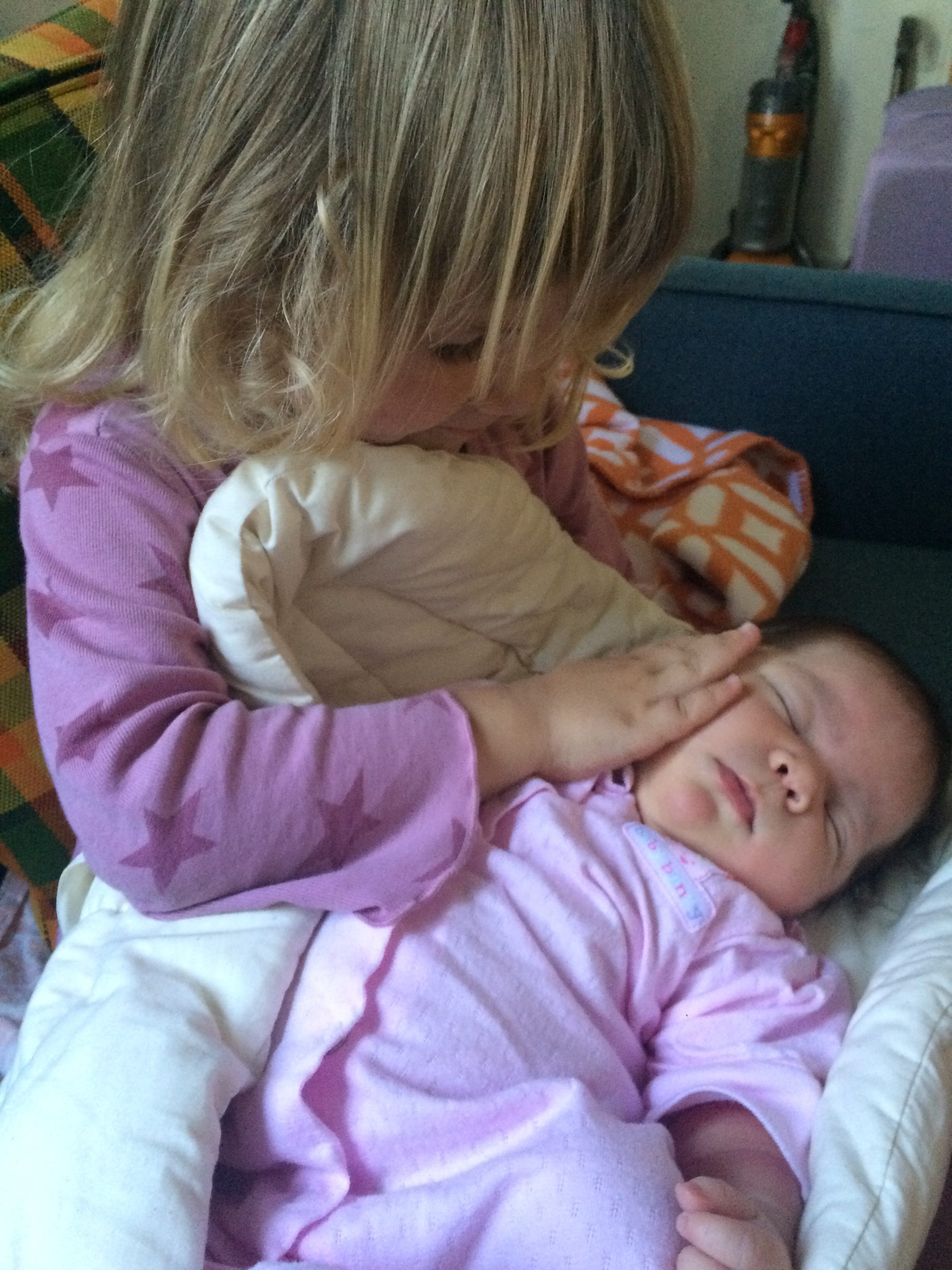
Human Kindness: The most common source of awe is witnessing other people’s kindness, courage, and integrity. We seem wired to be moved by human goodness. And I find that profoundly hopeful.
You also have a very helpful acronym for what parents need to do to create a family culture where more awe is possible -- PDF. Can you break that down?
Sure! This acronym comes out of research from Stanford’s Challenge Success. They identified three protective factors for children’s mental health and wellbeing.
P: Playtime
D: Downtime
F: Family time
Making regular time to play, to unplug, and to connect with loved ones may seem simple – but can be counter-cultural in a fast-paced, status-driven, screen-mediated culture.
I started thinking about the booming popularity of psychedelics while reading your book and wondered if you think it's a signal of us aching for awe. It feels like the extraordinary noticing of our ordinary lives which you are arguing for in this book, is something that people are dipping into briefly through the use of medicine journeys.
I think you may be onto something. Go with me for a second: we can see that same yearning, I think, in the outpouring of grief for the poet Andrea Gibson, who passed away this summer. And then to see so many new readers discover Gibson’s words for the first time and have that visceral reaction – that gasp of wonder – at their ability to capture the magic of being mortal. Both Gibson and Mary Oliver embodied that “extraordinary noticing of ordinary lives” – as you so beautifully put it. So while I don’t plan on trying psychedelics anytime soon, I do try to make room for more radically beautiful poetry. Because the words of people like Gibson and Oliver are their own kind of medicine.
I am a sandwich generation caregiver, also caring for my dad, who has dementia, and I noticed that there was a season of his dementia where he was so beautifully in touch with awe. He would look at a tree and exclaim, “I have no idea how this got here!” It was really quite special. Have you looked into the awe of elders at all in your work? I loved your section on the wisdom of elders and the awe inherent in the circle of life, but this is something different I’m interested in...do some illnesses and the limitations that come with aging, generally, create unexpected opportunities for awe?
I love this question. I didn’t specifically explore the awe of elders for this book, aside from the fact that many of the research studies – from the benefits of music to taking awe-walks – included cohorts of elders.
So my thoughts about aging and wonder (over here in the throes of perimenopause) are more anecdotal. Like the woman who told me last week that as her husband’s ALS progressed, finding one daily moment of tiny delight became their most cherished ritual. Like my own mom, twice widowed, who speaks with great affection about her second husband’s struggles with dementia – including how he could become so delighted by small things like a bird in the window. And the women who tell me that they enjoy their grandkids more than they are able to enjoy their own small children – that they aren’t in a hurry or under pressure in the same way.
And that makes me think about my own maternal grandmother, who lived with my family until her death. Grandma’s entire life was hard manual labor – running a ranch and raising seven kids in rural Idaho. And she was depressed for most of those years.
I knew her when she was bedridden from osteoporosis. She looked so fragile – because her bones literally were. My mom was stunned by how much she and I enjoyed each other’s company. Grandma had been a severe parent and left her children with complicated memories. That is true. My memories are also true: reading books together, playing finger games, singing songs, and lots and lots of snuggling in her recliner.
We all lead complicated lives in a complicated world. And that’s why awe matters so much at every age and stage. As Mary Oliver said, “I got saved by the beauty of the world.”
Me too, over and over again.
Well make that three of us. Isn’t this just a beautiful (re)orientation? I feel so grateful for the reminders here and hope you do, too. But Deborah’s book here and follow her on Substack here.
What awe practices do you have—with kids, elders, or solo? Drop them in the comments, please.
Thank you for asking such thought-provoking questions, Courtney!
You manage to find so many beautiful people, thoughts, works of art. I am inspired by you and your guests every single time. Sending you and your dad wishes for moments of play and awe to help you as you ride the waves of this time of inner and outer turbulence.