

Two exciting announcements/reminders before we dig in to the interview:
🍿Please join us for the biggest care-focused movie club ever (!!!) on Tuesday, November 10th at 9am PST // 12pm EST. Register for our live Zoom gathering, and you’ll receive a private screener link and password so you can watch Take Me Home at home before we meet. I’ve seen it and it BLEW ME AWAY. We’ll come together to reflect on the film, with Ai-Jen Poo, co-founder of Caring Across Generations, and Liz Sargent, the film’s writer, director, and producer. This is an exclusive chance to watch the movie for free before it starts streaming!
⏳Today is the LAST DAY you can pre-order Jen Bloomer’s gorgeous WE GATHER calendars and get them in time for holiday gifts. Our community can use code COURTNEY10 for 10% off.
And as always, please become a subscriber so you can support cool collaborations like this. They take a lot of coordination labor, but they are SO worth it. I love introducing you all to amazing art and people. Help me keep doing that by becoming a paid subscriber today.
It’s a weird time to be an American, but I guess it’s always a weird time to be an American. We’re a nation of remix, amnesia, competition, dreams, death, lies, great art, fast food, and, as it turns out, a very fragile democracy. Sometimes it can feel hard to be a person with an open heart in a place like this.
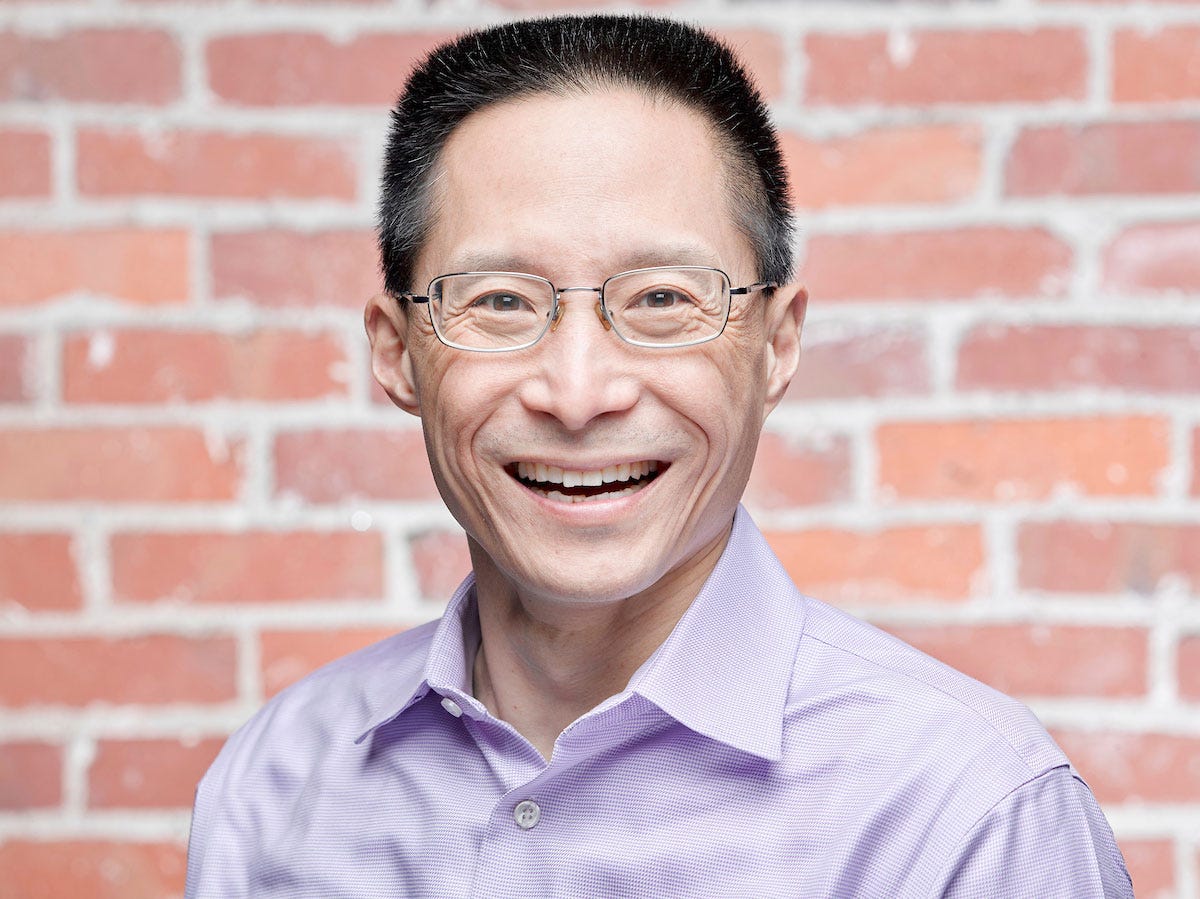
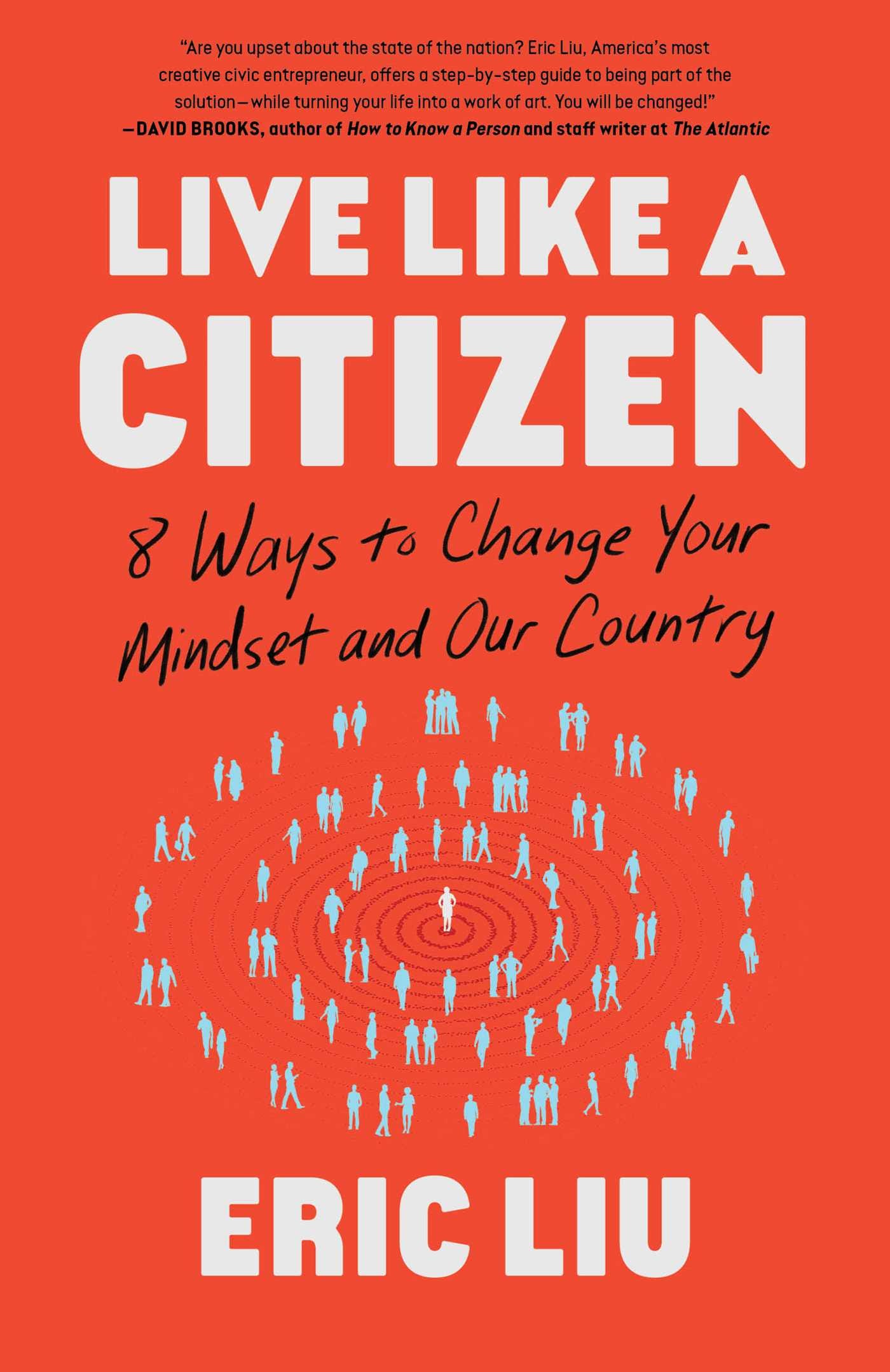
Which is part of why I love Eric Liu so dang much. He’s a man who refuses to let his heart close or break, at least not permanently. And in order to do this, he just keep reinvigorating his sense of his own citizenship with joy, creativity, and community. He’s also a brilliant writer and one of the most strategic, clear thinkers I know. So when I heard he had another book coming out, this one called, Live Like a Citizen, I knew I wanted to read it and talk to him about it.
It’s a fantastic example of the old feminist adage—the personal is the political—as it guides you through eight steps for re-engaging your own civic inner and outer life. Eric is the perfect teacher for our precarious times…
Courtney Martin: The premise of this book is that, yes, the crisis of our democracy is structural, but it is also cultural. And not just cultural, but personal. In fact, the first three chapters are on how to see, listen, and feel! I think most people would be surprised to find those topics in a book about how to be an engaged citizen. Can you explain that choice?
Eric Liu: I started the book with how to see, listen, and feel because those three habits are elemental. If we can’t unlearn the social media way of seeing each other — for instant righteous judgment, in flattening and dehumanizing ways — then everything else we do in civic life gets distorted. If we keep listening only to confirm our prior worldview and narratives, then we make true relationship impossible and we spiral toward disunion. And if we deaden our senses to the pain and joy and love that people unlike us experience, then we will become the very thing we fear.
I loved that you advocated that one important thing that engaged citizens need to do is “listen like a caregiver.” Can you expound on that one?
To listen like a caregiver — something you know so well, my friend — is to be attuned to what’s not being said as much as what is. It is to listen not in order to get something out of the other person but to figure out what they need and how you can help. And what they need so often in civic life is just the experience of being acknowledged. Listening like a caregiver also means listening without promising that you can fix everything, because sometimes you can’t. And respecting that fact is its own form of recognizing the dignity of another.
You wrote, “A person is a pattern: a pattern of habits and spark and reactions and impulses and passions.” I have found it to be so true in my own life. In some ways it feels like another way of saying what Maya Angelou said, “I’ve learned that people will forget what you said, people will forget what you did, but people will never forget how you made them feel.” How can we learn to see our own pattern accurately? I feel like that is part of being an engaged citizen--having a somewhat accurate self-assessment.
The best way to see your own patterns accurately is to be not alone. It is with friends that we form our patterns, and it in friendship that our patterns reveal themselves. I don’t mean just close confidants. I also mean civic friends — people in your community with whom you may share weaker ties but also a strong instinct to connect and to be respected.
One of the reasons you give for joining a club is “Because joining is inefficient.” I loved that! Say more.
I think we need more inefficiency in our civic life, not less. The obsessive pursuit of efficiency — of return on investment, frictionless transactions, data-driven productivity maximization — has warped our entire culture. It’s “inefficient” to see someone beyond surfaces, to listen to them for understanding rather than rebuttal, to join groups of people you don’t yet know, to change your mind. Democracy is supposed to be inefficient because we aren’t machines; we are complex contradictory feeling beings and we must learn over and over again how to live together.
It feels like there is so much narrative whiplash right now around how machine learning and AI are changing what our experience of being engaged citizens can and should be. What’s your advice for weathering this kind of ontological storm and trying to make ethical choices?
The rise of AI is going to put an ever greater premium on the civic, the relational, and the trust-bearing. People who know how to invite and organize and join with others in person, across lines of difference, for face-to-face activity and the creation of shared experiences and what we at Citizen University call “bonds of trust and affection,” will become ever more important to the functioning of society. That’s because AI is going to make so much of our everyday lives less trustworthy — from news and media to economic transactions to the production of knowledge. Only the real, the tangible, the relational will be able to hold our trust. By the way, I think this is going to invert how we feel about scale. Digital life has made scale the holy grail of all human activity and innovation. But now we are entering a time where human scale will be the only scale that’s worth a damn. That’s why every one of the eight verbs in my book is meant to be practiced offline, offscreen, in the presence of other bodies. That’s the only way the body politic can maintain its integrity.
Buy Eric’s new book here and check out the work of Citizen University here. I met some of my best friends and favorite people in life at Citizen University gatherings!
Tell us: how would you grade yourself in terms of being an engaged citizen right now? Do you listen like a caregiver? Do you see your pattern accurately? Are you a little too in love with efficiency? And how did the midterms make you feel?
I'd like to suggest that as citizens of a democracy, we should be celebrating today's electoral victory against Trump's demagogic regime!
But such elections are not enough, so we need nonviolent action as concerned American citizens for PEACE!
The basic truth is that we Americans, Democrats or Republicans or neither, are citizens of a country at war. My hope is that Democrats newly elected to power, must try to stop this ceaseless conflict against Iran .
In personal terms, joining the anti-Vietnam nonviolent campaign remains my proudest statement of citizenship. This drove me to realize that all of our wars since then have been unjust, so I spoke against them as a professor of political science for 50 years.
Therefore, as a Gandhian pacifist, the principal lesson I've learned from U.S. history, especially in my lifetime of 88 years, is that war resistance remains an imperative or responsibility of a citizen. (shout out for Barbara Deming, participating as member of the War Resister's League, 1960's-'70's).
MLK is my model American citizen. I was inspired initially by his powerful speech against the Vietnam war in the Riverside Church on April 4, 1968. Among all of his writings, this address should be reread continually.
Thanks once again for this opportunity to contribute to Courtney's marvelous newsletter. I am forever grateful for these indispensable insights. I was once fortunate to be her teacher, now she is mine!
Peace, DD
He does have the best smile and today he has much to smile about as citizens showed up en masse to speak truth (reality) to power.