

I’m co-creating a series on the books Hospicing and Outgrowing Modernity with the pastor of my church, Marcus Leifert (and friends!). You might remember that I sent along the book report I made on the books awhile back. You can revisit it here. This week, I thought I’d offer up a bit on what we did on Sunday to launch it…
Let’s start with the title of the first word: hospicing.
Don’t worry about modernity—it’s too much for now. What do you think of when you hear the word?
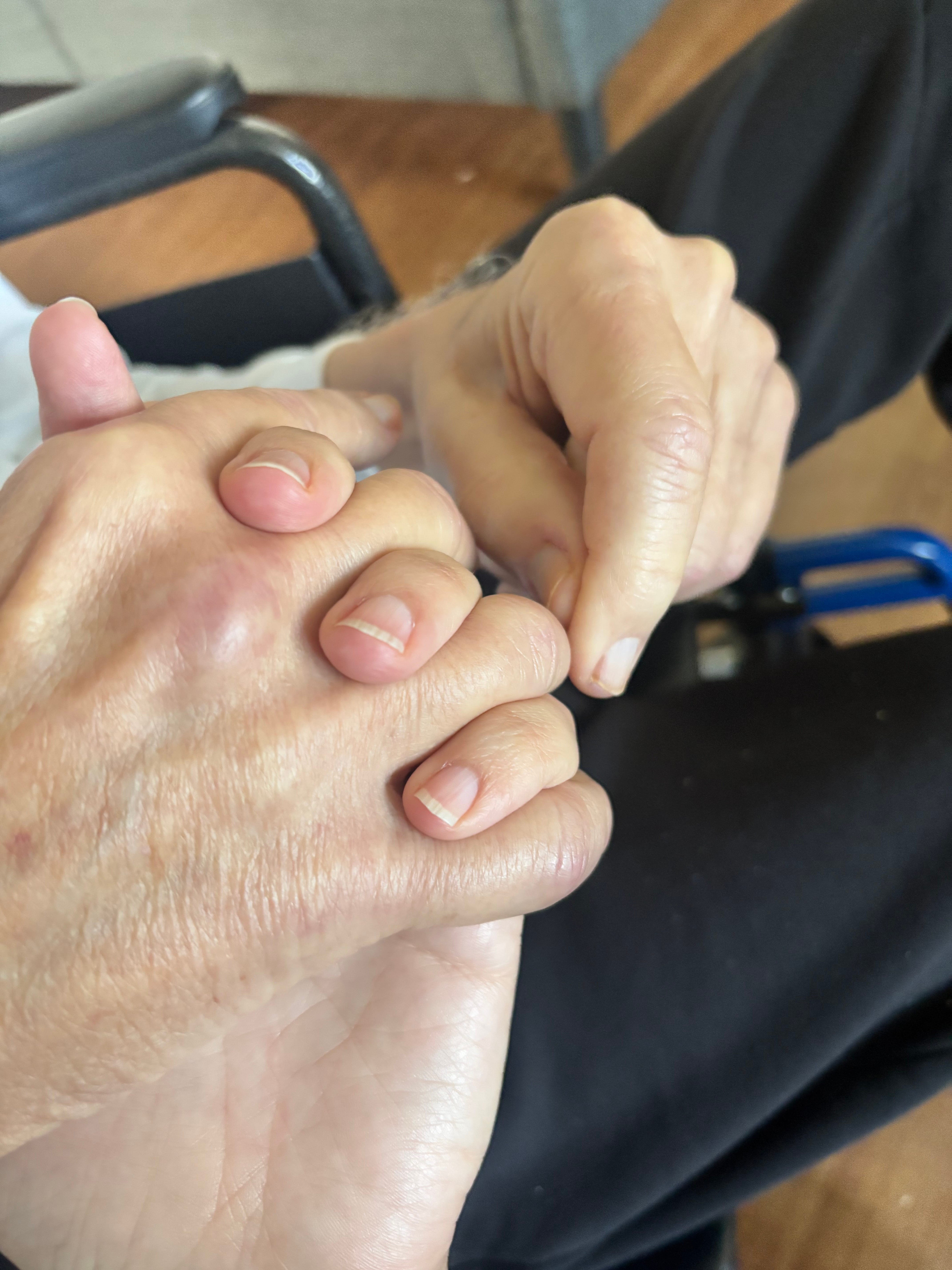
For many of us, what comes to mind is the formal hospice movement, which grows out of a palliative approach to life-limiting illnesses and the people that have them. Hospice is about the acceptance and accompaniment of death. And death, of course, is a kind of ending, a form of limitation.
What Vanessa Machado de Oliveira asserts in her books is that we are facing a moment where hospicing muscles and mindsets—more than curative muscles and mindsets—are deeply needed. She writes:
As we stand at the precipice of endings—of species, ecosystems, organizations, and systems themselves—the work of hospicing is to move beyond fear and embrace the deep transitions ahead with wisdom. To be stewards of this time, we must develop the practices and capacities to tend to these endings, not with urgency or control, but with a kind of stillness that invites the birth of new ways of being. Endings are not failures; they are part of a cycle that requires presence, reverence, and humility.
What is something in your own life that you have or are currently hospicing–however unskillfully? It could be a marriage, a friendship, a habit, a developmental stage that your kid is growing out of, peri-menopause, a literal death of an animal or loved one…
What has that been like for you?
Chances are, because you have been shaped by this particular culture (this is where “modernity” comes in), you have approached it with some amount of what Vanessa Machado de Oliveira says are our cravings for coherence, control, consumption, convenience, certainty, and comfort.
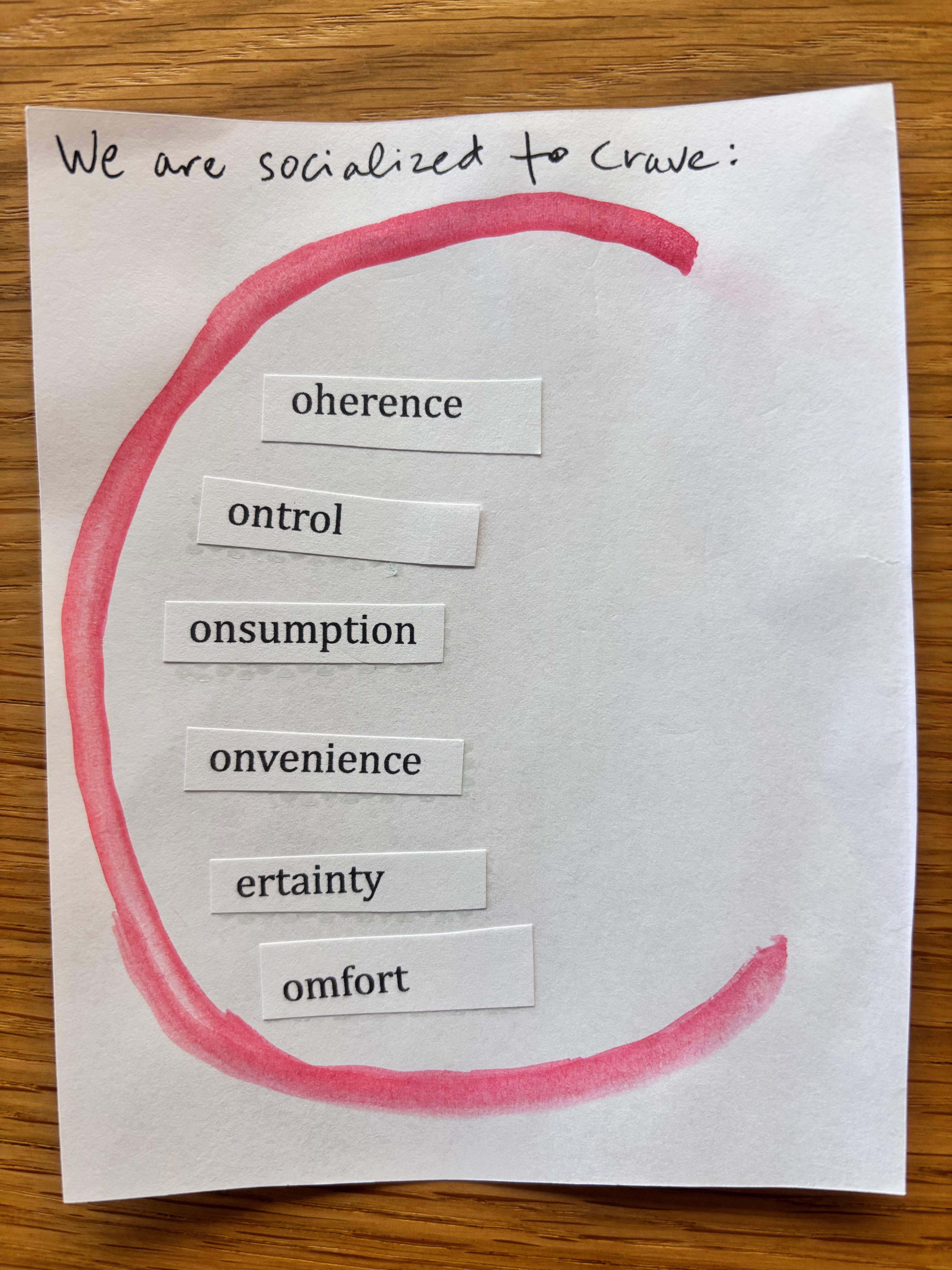
You’re not bad because you crave these things. You are a permeable being living in a society invested in you craving these things. You’re also not innocent. You get to notice these cravings in yourself and laugh at them, move away from them, maybe pause before you proceed as socialized. You might even notice that you have a special draw to one of them in times of anxiety, stress, and/or fear. I know, for me, coherence, control, and certainty look very attractive when I’m feeling unmoored.
Vanessa Machado de Oliveira urges us to consider alternative paths: decentering, disarming, and dethroning the ego, decluttering the unconscious, deactivating affective landmines, developing responsive discernment, disinvesting from modern/colonial desires.
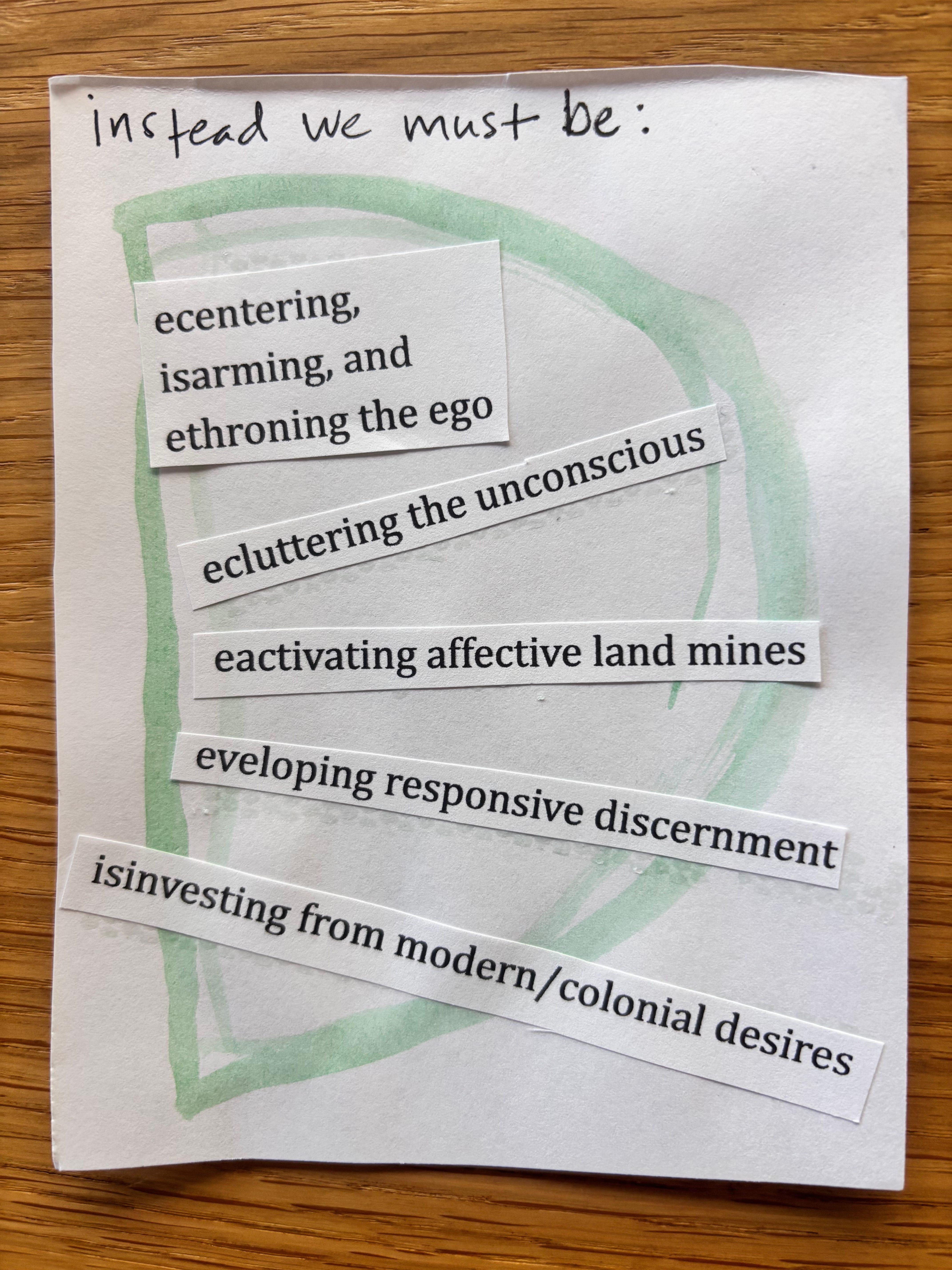
That’s a tall order. I know, I know. That’s how I feel when I look at her list, too. But it also feels wise and right, doesn’t it? It’s worth reflecting on which of these feels especially easy or hard for you. I’m not so bad on the last one, but have been struggling with deactivating affective landmines in midlife (money, especially, gets all my family of origin shit going).
So my invitation to you is that this week, notice when you’re on automatic pilot, headed toward coherence, control, consumption, convenience, certainty, and comfort and see if you can steer, even just the smallest bit, into a more awake approach. Perhaps even see if you can steer into decentering, disarming, and dethroning the ego, decluttering the unconscious, deactivating affective landmines, developing responsive discernment, disinvesting from modern/colonial desires.
I’ll give you an anonymous example that someone shared from the group. Her kid just started high school and he is loving it. After being the kind of guy who only had one best friend at a time, he is widening his circle—coming home with stories about all kinds of new people that are lighting him up, sharing inside jokes, even asking about having a big birthday party this year. His mom is thrilled, but she is also wondering about his old best friend—a quiet, shy type who probably won’t mesh well with this growing circle of teenagers, who probably feels side lined, and left out. Alongside the mom’s joy that her son is making friends, is her worry about this other kid, and her growing feeling of guilt toward the other kid’s mother, who she really likes.
Should she intervene in some way? Should she remind her son to be nice to her old friend? Should she call the other mother? Should she schedule a time for the four of them to hang out? Should she sing “make new friends” around the house?
I don’t have the right answer for this mom, but I certainly think she is watching something erode and feeling many feelings at once as it happens—which is great fodder for noticing the Cs and Ds working on and within her. How much of her reaction is about her own childhood friendships and the ways they eroded or didn’t? How much of her reaction is about wanting to seem kind and intentional to the other mother? How much of her reaction is a response to a wider culture that seems to discourage loyalty and endurance in relationships—preaching a gospel of freedom and excess?
You might be thinking—why the hell are we talking about something as small as high school friendships when the world is burning? Well, that’s the point. The world is burning, and if we can practice moving from the Cs to the Ds in our little (i.e. personal) lives, maybe we can get better at it in our big (i.e. public and political and economic and environmental…) lives, too.
I’ll leave you with another banger of a quotation from Vanessa Machado de Oliveira:
People who are socialized within modernity are terrified of hearing or sensing their own ridiculousness because modernity codes it as a form of demotion, humiliation, or belittlement. I invite you to experience the absurdity of modernity within and around you as a form of connection, endearment, and liberation from the grip of arrogance; as a way to laugh at yourself and be taught by the precarity, brokenness, and imperfection of our collective existence. This is also an invitation not to turn your back on the shadows that become visible when placed in the spotlight.
So tell me, what are you hospicing in your own life? how are you noticing your own Cs and Ds at work? Are you having a good laugh at yourself sometimes? I certainly hope so.
Such a great read on perspective and adapting with humility! Thank you, as always.
I am very interested in this subject and will look for the books, but I have a perhaps silly question.
Sometimes- a couple of times in this piece, you write hopsicing rather than hospicing.
Is this to indicate a new approach or perspective the author proposes from the traditional interpretation of hospicing, or did the computer just transpose the letters?
I am checking whether I am missing an idea.