

If you know me, you know my brother. He trained me to shoot hoops in the alley of our Colorado Springs neighborhood, tried to school me in cool music on our drives (I performed resistance, but paid careful attention), and protected me from older boys who flirted with me (it was never clear if it was genuine or just a way to get a rise out of my big brother). After college, we eventually lived together in various Brooklyn walk-ups near Prospect Park, sharing friends, long, drunken nights on rooftops, and many, many meals, heartbreaks, and creative struggles. He officiated my wedding in my parents’ backyard and a few months later, I officiated his.
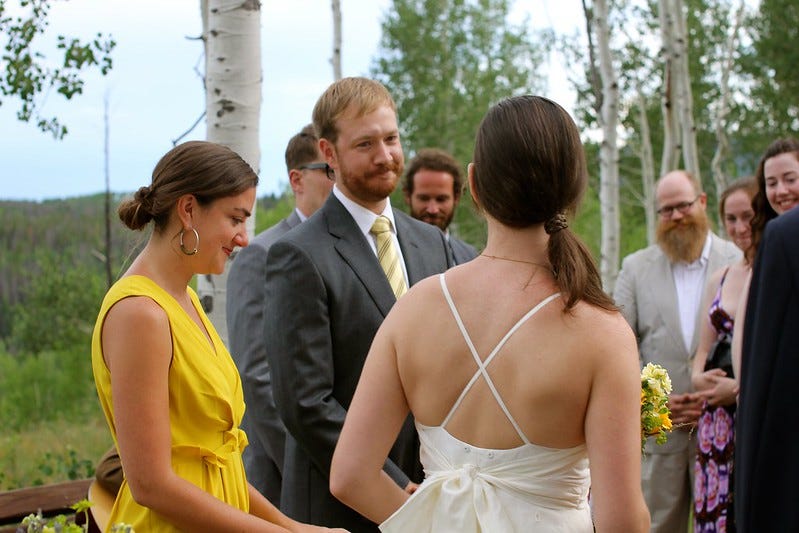
Today, we are back together—taking care of our aging parents side-by-side, while living three blocks away, raising our four kids together (his two sons, my two daughters), and taking sweet walks where he points out mushrooms to me and I tell him about my latest interview. I’m one of those lucky people who not only loves my brother, but genuinely likes him. I would be friends with him if we weren’t related at all.
My parents shaped me deeply, but there is no question that my brother shaped me as much or more, and will for much longer. We are each other’s life partners, come what may; I’ve known him since my birth and hopefully will til death. There’s just not a lot that can compare to that longevity, depth, and destiny.
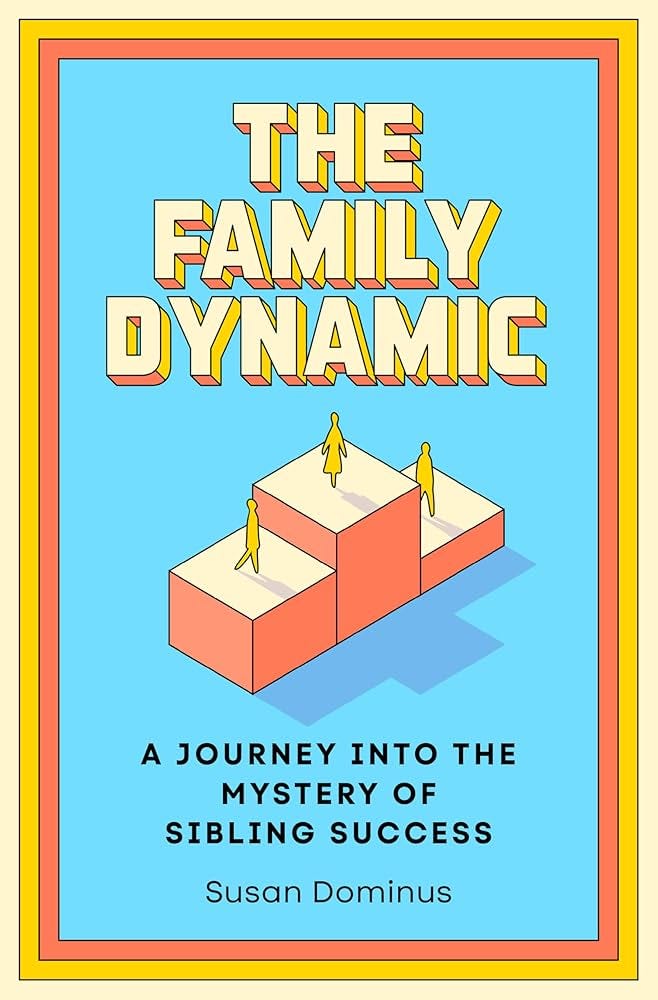
So it was with such excitement that I turned to Susan Dominus’ new book, The Family Dynamic: A Journey into the Mystery of Sibling Success, in which she does deep dives on a variety of families where there is a preponderance of “successful” siblings. Her goal was to understand what the ecosystem of these families was all about—the formal and informal agreements and rituals, the expectations served at dinner, the competition, collaboration, and creativity coursing through each interaction.
I love pretty much everything Susan writes (she is the brilliant journalist behind many of The New York Times Magazine pieces that set your group chats ablaze, like on open marriage and menopause) and the topic seems seriously under-explored, so this was a no-brainer read for me.
I reveled in it. My brother and I are not “successful” by every standard, and certainly not by the big, performative standards of some of these profiles (Olympic medals, bestsellers, start-up unicorns etc.) to be sure, but we are “successful” if that is defined by lives of creative fulfillment, connection, and resilience. We are also “successful” in our love and care for one another, which as a mom of two daughters, I can now say is a metric I care about most deeply. I have often wondered what it is my parents’ did to create these conditions, and what was out of their control; reading this book helped me reflect on both a lot. What a gift.
Without further ado, meet Susan…
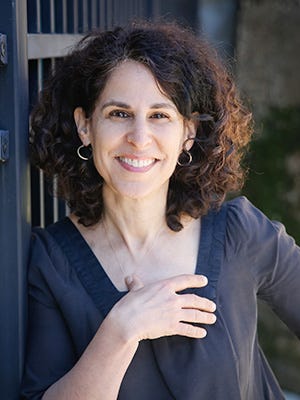
Courtney Martin: This is a book about high-achieving families, but as you point out, it is also a book about “the real costs of having that kind of drive.” As such, it is both admiring of the families you profile, but also fairly critical at times. How did you get the families to agree to be profiled and then what was the fall out when they read the profiles, if any?
Susan Dominus: It’s so interesting to hear you characterize the profiles as critical--I actually feel enormous respect and admiration and deep fondness for all the families that I wrote about in this book. I would say that the family members themselves were extremely honest with me about whatever they perceived as their flaws--Mary Murguia, chief judge of the 9th circuit, was incredibly humble, and felt it was important to acknowledge that no family is perfect, even as their family had been held out for so many years as a model of the American dream. I do not think anyone was surprised by anything that appears in the book’s pages, as it all grew out of many honest conversations we had over time. [Note: I probably should have used to term honest instead of critical here, I realize. Susan, herself, isn’t critical, but she is probing and much is revealed—good, bad, ugly, and beautiful.]
Part of your focus here is sibling influence--the ways in which our siblings, not our parents, shape who we become. You write that, for example, “differentiation can be a form of refuge” for high-achieving siblings, like the Groffs. That really resonated with me, as a younger sister who followed a very academically and athletically competitive big brother. (He was math; I was English.) But I’ve noticed the older we get, the more our values, passions, and even gifts seem to be not all that different after all. What did you notice about the ever-evolving nature of siblinghood over time? Did patterns hold or were there lots of surprises?
Great question! A lot of behavioral genetic research actually finds that genes do express themselves more over time, as people seek out environments over the years that reinforce their natural genetic tendencies. So while a family environment might force one child into a niche of some kind, eventually the genes win out, many experts would argue. Whether it’s genetics or something more complicated going on--niche shedding?--you do see this phenomenon of siblings growing more alike over time in the Groff family. Sarah, the athlete, seriously thought about writing a book (her sister is a novelist); and although she didn't think of herself as a great student, she’s now getting her PhD in psychology, which means she’ll end up having more formal education than Lauren.
I see this kind of confluence over time happening in my own twins: When they were young kids, one played a ton of piano, and the other decided music wasn’t his thing. But by the time the one who supposedly wasn’t into music was a senior in high school, he’d picked up guitar, and now it’s one of the great joys of his life.
You write “Most parents would say that what they care about chiefly is their children’s general and future happiness; I am among them. And yet somehow, most parents do not see it as their charge to make a reasonably happy child even happier.” Why do we say we want our kids to be happy and then focus so much on achievement instead? Is this related to the economic precarity we’re all feeling these days given the volatility of our political environment?
I am sure there is some truth to that: economic anxiety is high, all anxiety is high, and the world, in this era of overparenting, does seem more competitive--bigger, more complex--than it did twenty or thirty years ago. But I also think we don’t always know how to make our kid happier, or even how to measure it.
When it comes to school, you actually get a report that purports to tell you, in metrics, how your child is faring academically. No one tells you how happy your child is--sometimes, least of all, your own child. It can be hard to gauge. The least appealing explanation would also be that how kids do in school is sort of public information, which might make parents feel more responsible. Your child’s well being is a more private matter.
A lot of this book is about control--how much parents’ think they have, how they try to apply it for particular outcomes etc. But I loved what one mother of very successful kids told you about what she thought she’d done right: “I didn't break them.” After working on this book, do you have a better idea of the best way to not break our children? How do we shed delusions of our own control?
I did find it enormously helpful to read a lot of research that suggests that we really overestimate the effect of the small parenting decisions that loving parents tend to agonize over; your child is buffeted by so many other external forces--friends, media, their siblings, whether their bedroom was sunny or not, whether a teacher at a developmentally key moment was encouraging or not--that parenting is just one small part of their formative life experiences. An important one, to be sure! Just not as all-deciding as we imagine.
When I grasped that, it really helped me let go. Also, I think anyone who’s ever been a parent knows that “forcing” a child to do any one thing usually backfires--if the child is not intrinsically motivated, that child is less likely to do well whatever it is the parent is hoping will come out of that class or that extra hour of homework or practice. I’ve come to think a parent’s job is to love a child unconditionally, not maximize her or his or their performance potential. Diane Paulus, the innovative theater director, said her mother had a way of “watching without desire.” I loved that--she was always there for her daughter, who danced ballet professionally at a very young age, but she was there to appreciate her, not push or critique her.
I’d never heard of the idea of the “finishing child” and was fascinated by it. Can you explain what that is? (I’ve thought a lot about how the unlived lives of our mothers can play out in our own, but this phrase brings it to a new level.)
I'm so glad you asked! It's actually a term that Nell Casey, a brilliant editor and writer, came up with her own mother as they reflected on their own lives and children. They thought of the finishing child as the one who completes a dream or even a way of life that the parent wished for, but couldn’t achieve--either because of their own limited circumstances or because the moment in time was. not ready for that way of life. I’m so grateful to Nell for sharing that concept with me.
Later I wrote Susan back and said…
I have been thinking more about the third question...do you think there are class differences there? I was thinking about some reporting I did on guaranteed income and a lot of the mamas who got money talked about throwing elaborate birthday parties for their kids that they’d always wanted to throw. I wonder if the lower on the economic ladder your parenting context, the less confused you are about pursuing your kids happiness?!
The sociologist Anette Laurea writes about this kind of thing in her landmark book, Unequal Childhoods. In part, because wealthier parents have the resources, they do “consciously cultivate” their children, fostering their enrichment and furthering their interests and running them around from one extracurricular to the next. It’s hard to know whether people without those resources are happy to have simpler childhoods that seem to revolve more around family and community, or whether that’s an outgrowth of what’s available to them.
Buy Susan’s book here! Please chime in below.
What does this remind you of when it comes to the sibling dynamics you’ve been a part of (either as a sibling, parent, or observer)? What questions do you have for Susan?
"we have 4 children -- one of each" says my father....
i found myself bristling almost immediately at the lens of "genetic tendencies" and "eventually genes win out". As one of 4 in a genetically and gender blended family (2 adopted -- girl and boy-- and 2 biological -- girl and boy) my links to my siblings feel more grounded in shared experiences (including childhood) than they are in genes. I certainly find that as we have gotten older there is a deeper closeness to our relationships with each other that is unlikely to have a genetic basis. If anything, i think that the deepening relationships are at least in part a result of each of us growing into our individual "selves" beyond/outside parental expectations and siblings respecting and loving each of those real selves.
One could comment on so much here. I will limit myself to two thoughts after also saying I am so happy for you to have the relationship you do with your brother.
First, my childhood and subsequent life would have been incomparably worse without my twin sister. I think there is something fundamentally loving and hopeful in young children that creates a precious bond when the surrounding circumstances make no sense, like when a parent is an unreliable nurturer. The kids can keep each other safe and feeling valued, weathering storms as a little unit.
Second, I think we sometimes have a romantic view of the values of people who are poor visa vie their children. For many poor and poor-ish families, security and safety are over-riding concerns. Sometimes that might translate into community-centered values, sometimes into doing what it takes not to be bullied, sometimes into learning to hold your head low, sometimes into being feared on your block. It's just different pressures, I think.